



Your weekly slice of Historical Poetry
> Emily Dickinson
> Thomas Hardy
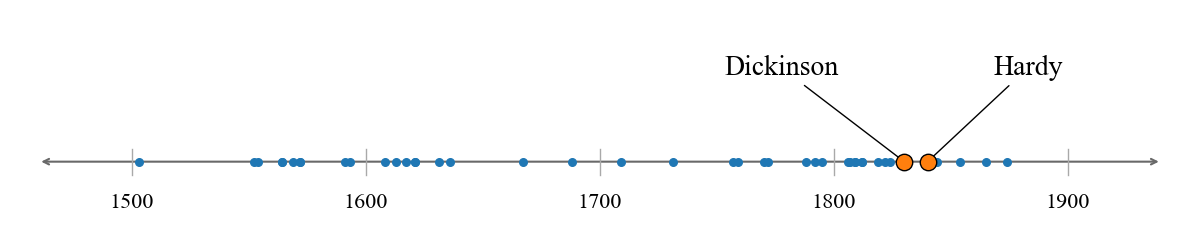
Welcome to part 19 of The Poets of History! This is the third to last installment in this series before the year is over, and we are getting ever closer to the end of 19th century. This week features two poets who are masters of the short, vivid, and gut-punching verse, guaranteed to make you either cry, smile, or at least feel again. I hope you enjoy!
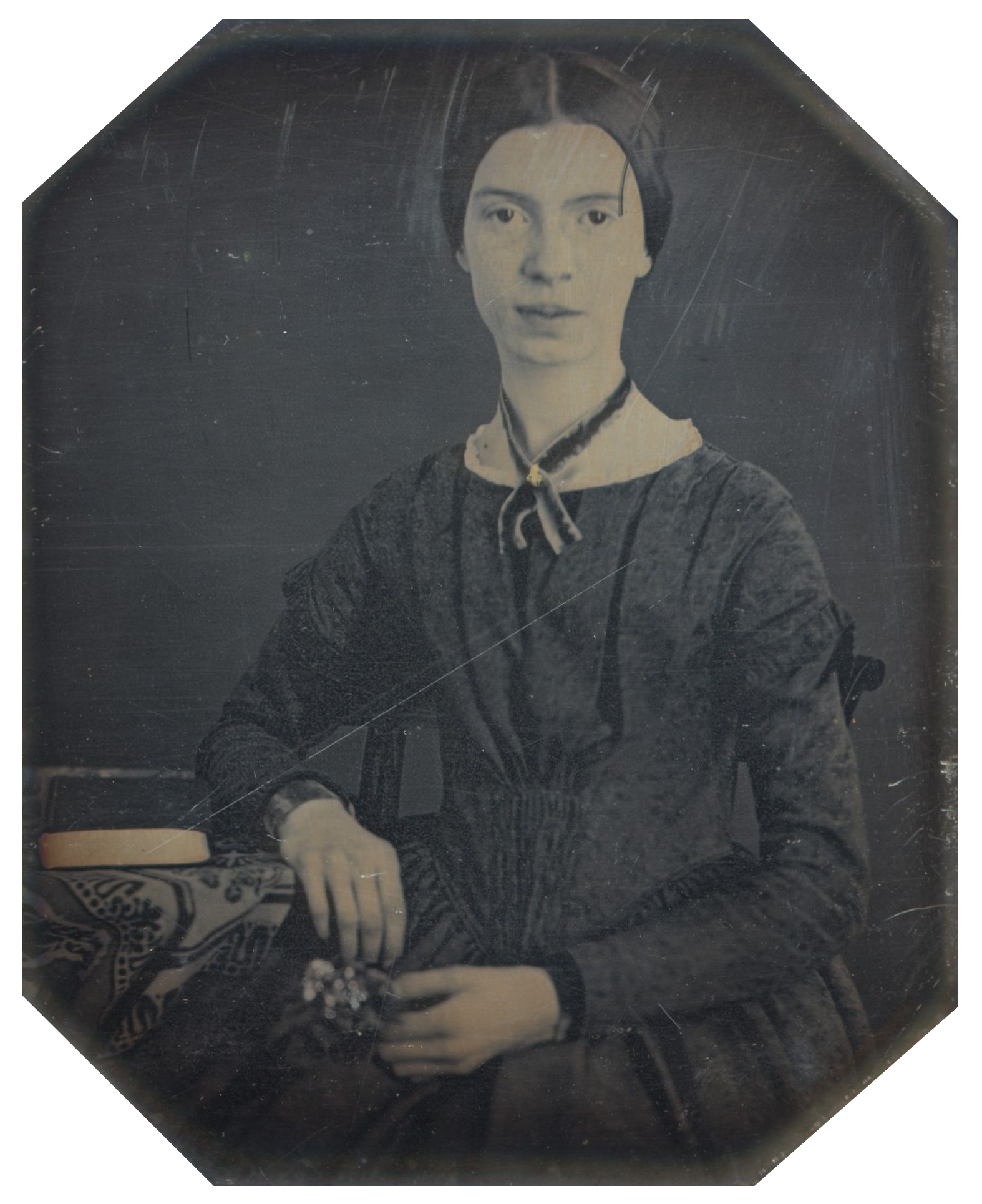
Emily Dickinson
1830-1886
Emily Dickinson was an American poet who, despite her prolific writing and her popularity today, was only published a few times during her life. She is well known for her distinct style and form, her poems being generally shorter in overall length and in line (rarely if ever using the pentameter). Her poems are typically in first person, offering adept observations and discussions of the world. There is the frequent feeling of sorrow or mourning in her work, of a seriousness that fits a life that was marked by much death. Despite this, there are still poems that contain hope, as is the case with the first one that we will discuss below.
"Hope" is the thing with feathers
This sweet poem personifies Hope as a bird that "perches in the soul," singing and keeping warm the heart of each person. It lives in even the hardest of lands and times, never requiring a payment (a "crumb") for its benefits. The poem is written in a standard ballad form with some slant rhyming in the first stanza ("soul" and "all"). You can find Dickinson's unusual practice of using dashes throughout her poems, highlighting words and phrases for emphasis.
The Bustle in a House
In such brevity, this little poem paints a sharp picture of mourning that you've likely not thought of before. The first stanza places you in a home the day after someone has died, one in which we find busy work underway. Those of us who have watched others lose someone they love have all felt the ache to see them cope through their sorrow. The days following death are frequently crammed with planning for funerals, setting things in order, frequent visitations... all this on top of the grief that they now feel. Whether this is what Dickinson has in mind, the second stanza shows us what the bustle and industry are actually about. It is not the cleaning up of a physical house, but the cleaning up of love. It is such a heart-breaking picture, lessened only slightly by the final line which points to the "Eternity" when such love will be in use again.
The poem is written in quatrains with lines of lengths 3-3-4-3. This is close to a ballad form, setting up a pattern with the first two lines, a departure on the third, and then a satisfying return on the final line. The stanzas are rhymed ABCB, though the rhymes themselves are fairly slant.
Further Reading
- I taste a liquor never brewed - A ballad poem on the intoxication of nature
- I died for Beauty - This is perhaps strongly inspired by Keat's (whom Dickinson loved) Ode on a Grecian Urn, in which we find the immortal phrase: "Beauty is truth, truth beauty."
- Because I could not stop for Death - This is a an interesting poem with a complex thought and intriguing imagery.
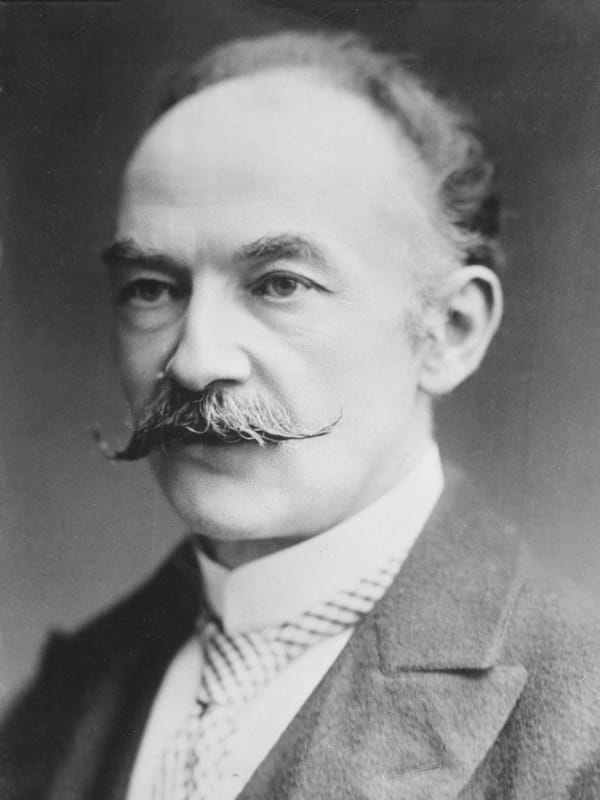
Thomas Hardy
1840-1928
Thomas Hardy was an English poet, novelist, and architect of the Victorian era. His writing fits within the growing tradition of "realism," which focused on portraying the world as it truly was, without ornamentation or exaggeration. His poetry is especially melancholy, often (in my opinion) to an oddly satisfying degree. You read his poetry to see through the eyes of someone downcast or broken: a soldier that just killed another man, a wife that can no longer attract her husband, and so on. As such, his poems are often not from his personal perspective, but from an imagined voice.
Four Footprints
A daughter married for the sake of her father and not for love; a clandestine meeting with her true lover: these features make for a strong and vivid poem. Hardy often wrote about class boundaries in English culture, so we can likely assume that this marriage was arranged to societal expectations. All the furniture of the poem contribute to the heartbreak of the scene, of the sadness the man feels to have lost his love to a man of a higher rank. The poem is written in iambic tetrameter quatrains, rhymed ABAB.
The Blinded Bird
Apparently, there used to be the practice of blinding birds for the sake of making them sing better. This cruel practice makes for a poignant image for Hardy to build a poem off of. The bird captures the essence of grace in the face of being wronged, of sharing beauty even when one has been damaged by others.
The poem is written in a unique form, in which each stanza begins and ends with the same (or similar) line. The meter of the poem is iambic trimeter, and the rhyming is structured symmetrically about the center, in ABBACCA.
Further Reading
- Lost Love - A heart-breaking poem about a wife attempting to capture her husbands attention.
- Channel Firing - A poem depicting soldiers at war in a trench.
- Afterwards - Another melancholy poem considering what others will say about us after we have passed.
For Those Lost
Abram Newcomer
In the spirit of the other authors in this post, I will share one of my own melancholy poems. I wrote this as part of a poetry collaboration that was organized by a few others on Substack back in May. The form was slightly challenging since I am not used to writing full poems in iambic trimeter. The lines are short and rhymed AAAB, where the final lines of each stanza have some referencing to breathing.
Thank you for reading this edition; I hope you learned something and enjoyed the poems. Only a few more poets left in this series!
Discussion