



Your weekly slice of Historical Poetry
> Percy Bysshe Shelley
> John Keats
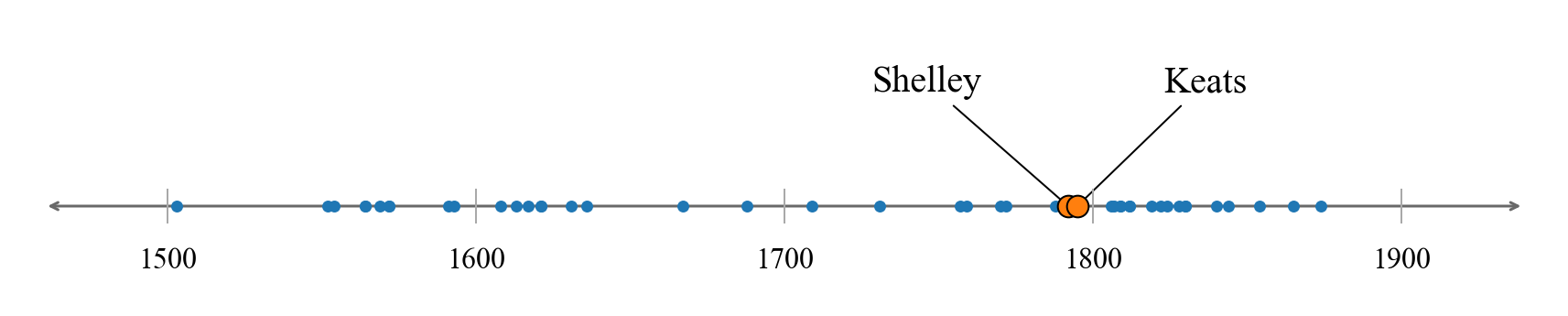
Welcome of the next installment of The Poets of History. We continue on through the Romantic era, turning our attention to two other prominent figures of the time. Enjoy!
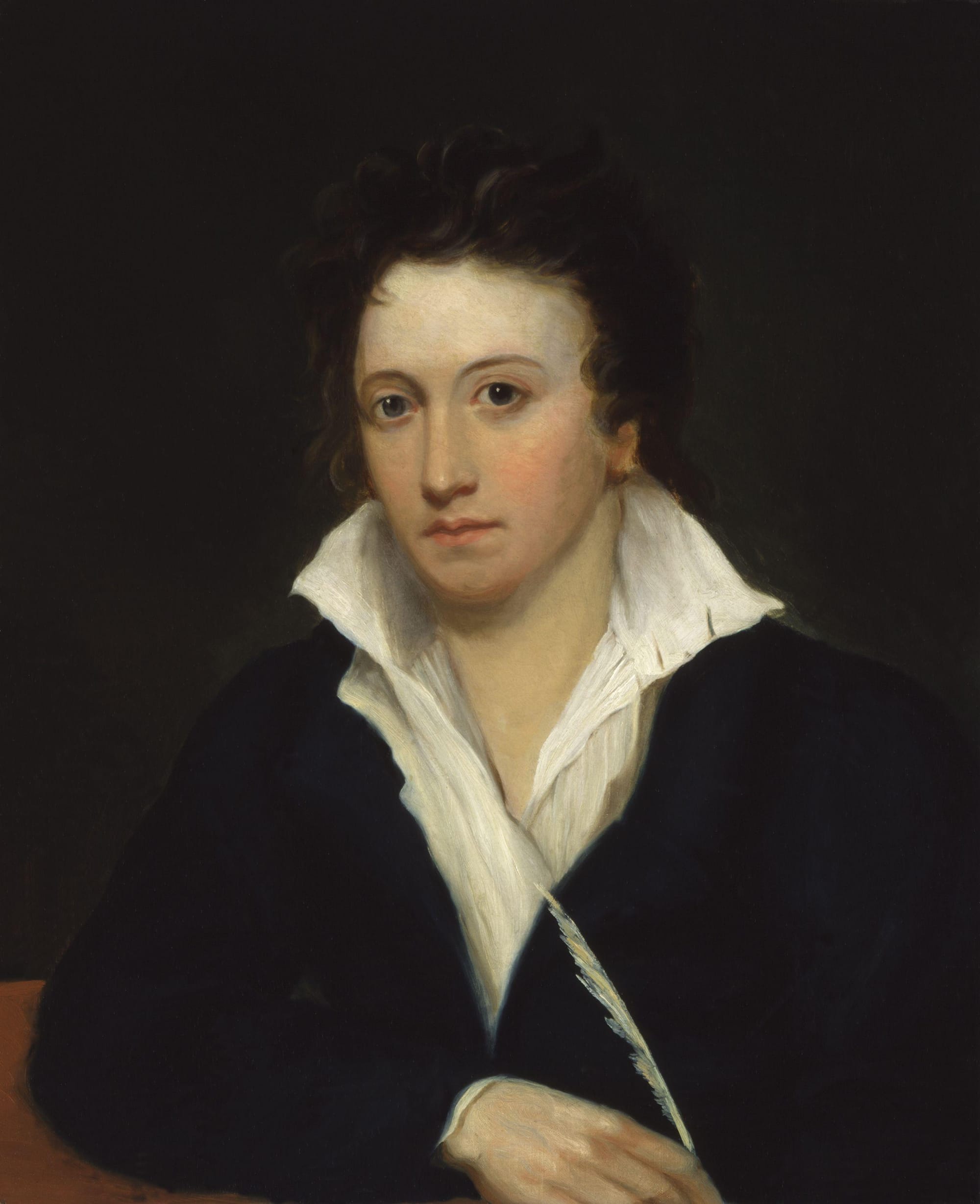
Percy Bysshe Shelley
1792-1822
Percy Bysshe Shelley was an English poet of the Romantic period, acquainted with many of the other poets of this time and husband to Mary Shelley, the author of Frankenstein. In many ways he was a bit of a radical, being quite vocal regarding his atheism and political views. His poetry, like the other Romantics, is rich in emotion, desire, and nature imagery.
Ode to the West Wind
The Ode is a Classical poetic form that was rediscovered and exercised heavily in the Romantic era. The basic premise of an ode is that it is a poem of praise addressed to something in particular. The actual structure of the poetry (i.e. its rhyme and meter) can be varied, though it often seems to involve pentameter lines and multiple stanzas or parts. This poem addresses the west wind of Autumn, describing its various actions and effects on the world. The end of the poem pulls this imagery together into an introspective gaze (another Romantic tendency), longing for the youth that was as free as the wind.
The poem's form is unique in that it is written in terza rima. Best demonstrated in the entirety of Dante's Divine Comedy, this form involves tercet (3 line) stanzas that are rhymed in an interweaving manner: ABA BCB CDC... The poem is split into 5 parts, each part containing 5 stanzas, the last of which completes the rhyme pattern with a couplet (two lines).
To Night
I found this poem interesting because it is addressed directly to Night itself, not Day. Night is longed for, called on by the poet to "Come soon, soon!" The poem is written with septet (7 line) stanzas, rhymed ABABCCB. The second and last line are strongly linked together, both being shortened from tetrameter (4 feet) to dimeter (2 feet).
Further Reading
- Ozymandias - A very well known sonnet. Though there is no strong conclusion at the end, the meaning is clear: the greatest of rulers will eventually be returned to dust and decay.
- To a Skylark - A rapturous praise of the bird that all the poets can't write enough of.
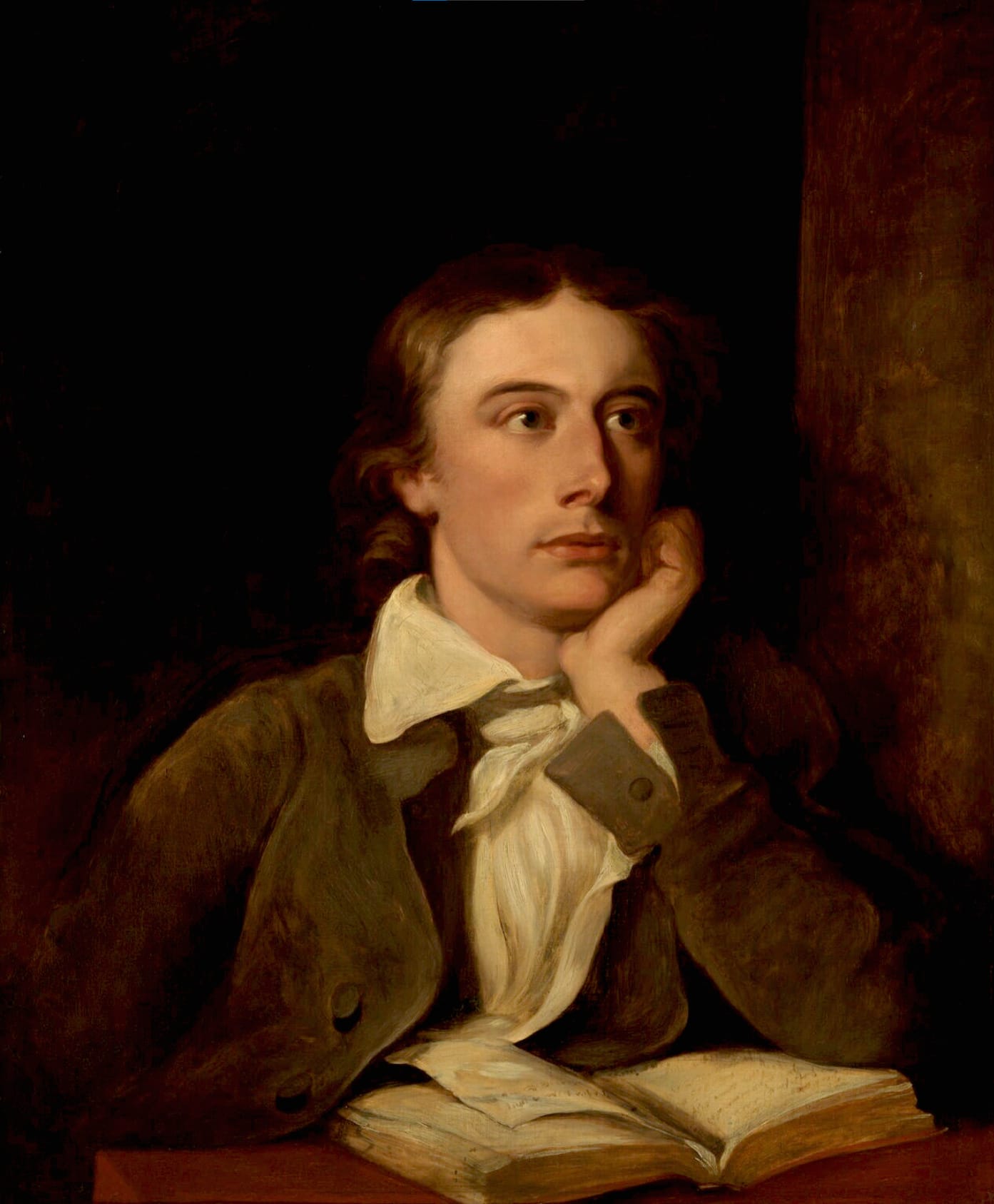
John Keats
1795-1821
John Keats was another English Romantic poet, one who tragically died when he was only twenty five. Despite this early death, he left a notable impression on the poets of his day and those to follow. As with Shelley and the other Romantics, he was a particular genius at writing vivid, emotional imagery. You can feel some of the angst of youth in his poems, along with an uncanny wisdom and insight in others. Oh, to make such an imprint on history with so short a life!
Ode on a Grecian Urn
This poem is based on an ancient vase from Greece which, as was the style of the time, was painted with images of various figures of story or myth. This poem is probably one of the best image-making poems that there is. To read it is to see the vase yourself and the various scenes that it portrays. But Keats does not do this by merely describing the visual details of the vase. He places you in his frame of mind as he looks on the images, imagining the world from which those images were derived, a world frozen in time on the side of a vase.
La Belle Dame sans Merci
Translating to "the Beautiful Woman without Mercy," this ballad poem depicts as much through the narration of a "knight-at-arms" wandering the hillside. Contrary to his odes, it is not written from the personal perspective of Keats himself, but rather from the imagined perspective of a fictional character.
Further Reading
- Ode to a Nightingale - Another one of his famous odes, considered by many to be his best.
- Bright star - A sonnet containing a longing for constancy, all the more tragic knowing Keats' shortened life.
A Flickering Wick
Abram Newcomer
This poem was recently published, though written back in January of this year. It was written in a single sitting after a difficult time in our church life. It was gift at the time, a reminder that Christ is the one who tends to his churches, that, even in our messiness, his will is accomplished.
Thank you reading! I hope these editions are encouraging to you and even a springboard for your own study of poetry. Take care!
Discussion