



Your weekly slice of Historical Poetry
> Elizabeth Barrett Browning
> Henry Wadsworth Longfellow
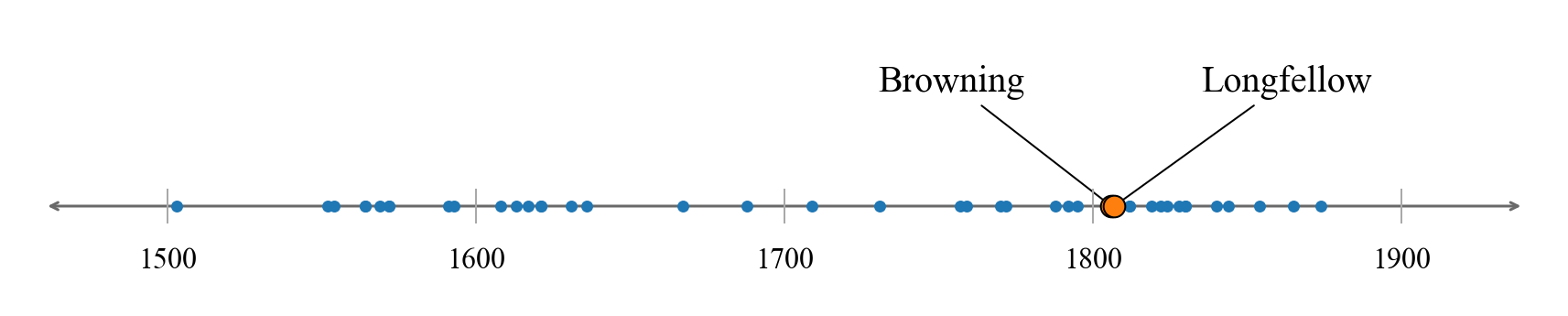
This week of The Poets of History introduces both a Victorian and an American poet! We are continuing to see the influences of Romanticism in this poetry, though you will see the ways in which it is further developed, expanded, and improved upon. Enjoy!
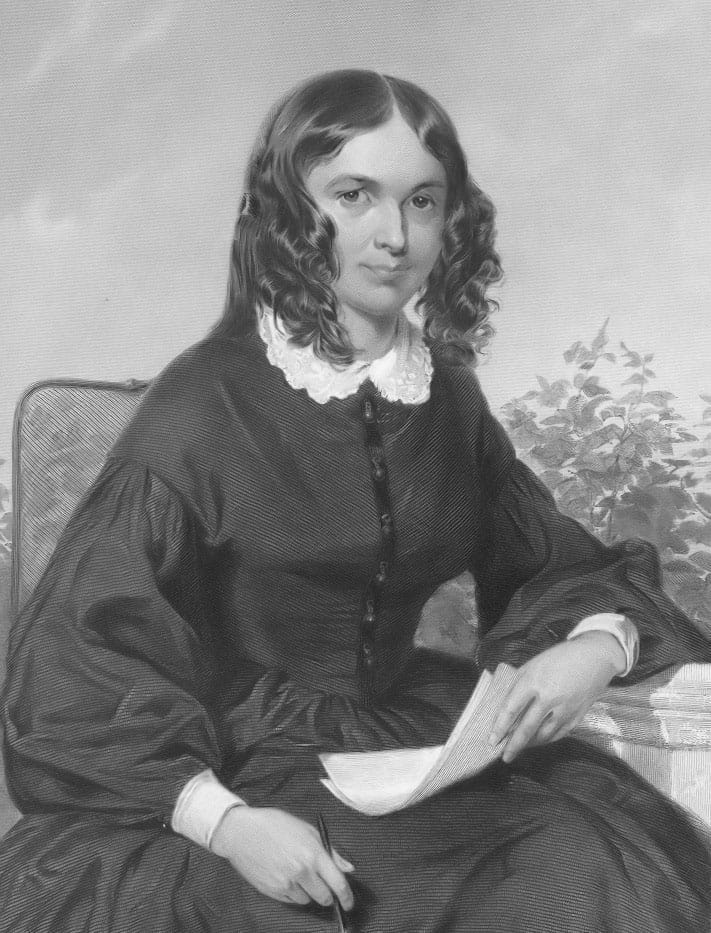
Elizabeth Barrett Browning
1806-1861
Elizabeth Barrett Browning was an English poet, one of the many of the Victorian Era. She is well known for her collection of sonnets that she wrote to future husband, Robert Browning, called Sonnets from the Portuguese. This sonnet series contains the famous "How do I love thee...", along with many others that are equally tender, modest, adoring, and pure. She suffered from chronic illnesses and pain from the time of her adolescence onward, and her courtship with Browning is one of the well-known love stories in literary history. She wrote on religious and social themes, advocating for many different causes, such as the abolition of slavery, women's rights, and the overturning of child labor.
My letters! (Sonnet 28)
This sonnet struck me quite tangibly when I first read it years ago, so much so that I remembered it clearly. It does what many of the great poems do: placing you in a visual scene where you can hear the author and see what they are doing in real-time. You see Elizabeth at her desk, fingering through the letters she's received from Robert, showing you various pages and phrases that she had wept over. You can feel her heart quickening with the wonder, the awe of a love that is returned. This is not an abstract exposition on love or letter-writing; it's a scene that a movie could not portray more beautifully.
The Deserted Garden
The poem describes a garden that Elizabeth would explore as a child, using this as an extended metaphor on growing older. You may notice in this poem (and in many others) that the premise is grounded in her own life, in some personal experience or vision. The discussion does concern itself with growing older, with not being able to be young anymore, with joy, cheer and wisdom. But it is also experiential, about a garden and a girl that used to play in it.
Further Reading
- Every Bush Afire - This is an excerpt from Aurora Leigh, a long narrative in verse. It contains one of the best phrases that you will come across today:
... Earth’s crammed with heaven,
And every common bush afire with God:
But only he who sees, takes off his shoes;
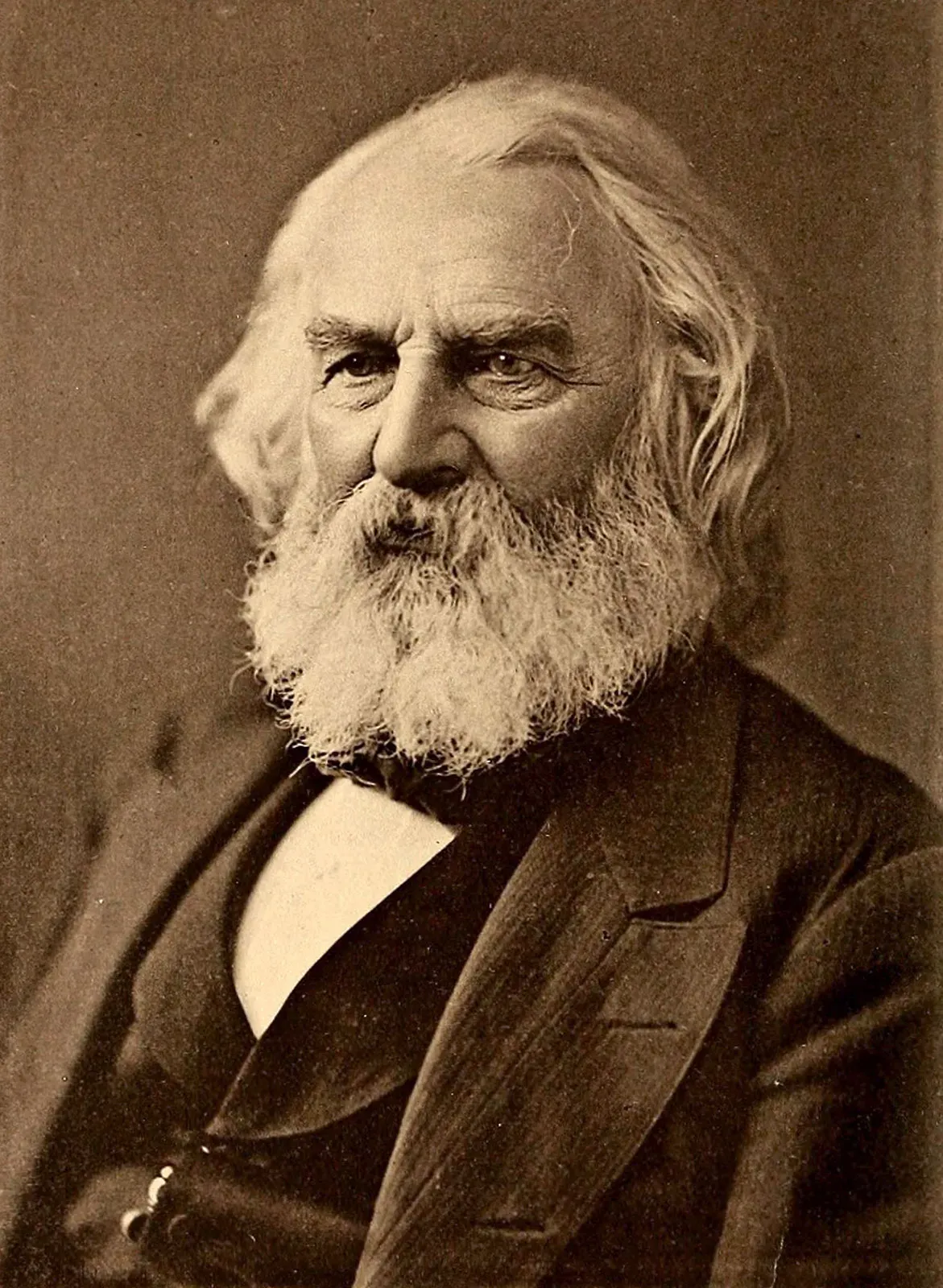
Henry Wadsworth Longfellow
1807-1882
Henry Wadsworth Longfellow was an American poet (the first to be covered in this series!), considered to be one of the foremost of the American poets. His poetry is known for being very approachable from all ages, lyrical, and generally wholesome. As such, he is included in a group of authors known as the "fireside poets," the writings of whom were frequently read at home with the family, around the table or the fire. This does not mean that all his verse is light, sentimental, and free from the hardness of reality; his poetry also contains myths, legends, and reenactments of key moments of American history. He has written long poems as well, such as The Song of Hiawatha and Evangeline, the latter of which is written in dactylic hexameter, an unusual Greek meter that is rarely employed by the English.
My Lost Youth
This poem is all about nostalgia, the remembrance of childhood, and the carefreeness of a boy's will. Each stanza has nine lines of lengths 434433344, rhymed ABAABCDDE, ending with a refrain:
"A boy's will is the wind's will,
And the thoughts of youth are long, long thoughts."
What I enjoyed about this poem, especially in the first stanza, is that the second B rhyme is delayed slightly, which adds to the sense of there being a memory of something far off, a sweet reminder of what came before. It takes the traditional ballad verse (4343) and stretches it out. The form accents the sense of the poem, as all good meter should.
Snow-flakes
Here's a wonderful Winter poem to get us excited about the cooling of our planet and the end of Summer. As the previous poem, this is very lyrical and well constructed. Each stanza has six lines with, again, varying lines lengths: 454432. The shortening of the lines toward the end embodies the feel of the descending snow, falling slowly down toward the ground. It is a poem about nature, but there is humanity in it: fancy, trouble, grief, despair.
Further Reading
- Paul Revere's Ride - A famous longer poem recounting the ride of this American patriot.
- The Skeleton in Armor - A mythical narrative given by the skeleton of a Viking
Everyday Creation
Abram Newcomer
This is my fourth Sal, written for a poetry contest a few months ago. It is, of course, chiastic, and each line represents a day of Creation (light/dark, sky/sea, earth/shore...). The lines work inward toward the center, where you will find day seven: rest. The goal was to map this week of Creation onto a single day, to highlight how we can find Genesis 1 in every 24 hours.
I hope you enjoyed these selections and will see you in the next edition!
Discussion