



Your weekly slice of Historical Poetry
> Dante Gabriel Rossetti
> Christina Rossetti

Welcome to part 18 of the Poets of History! My schedule for these posts has been thrown all out of wack due to heavy busyness in work and life in general. Regardless, we are keeping this series going and, by gorsh, will finish before the end of the year.
This week we have the privilege of feature two siblings! The Rossetti's have made an impact in the art world in both poetry and visual art. Both of their poetry is beautiful and of a unique style. I hope you enjoy!
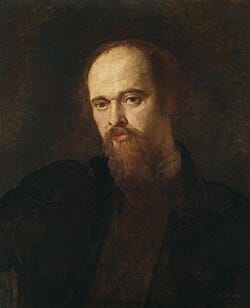
Dante Gabriel Rossetti
1828-1882
Dante Gabriel Rossetti was an English poet, painter, and founder of the group known as the Pre-Raphaelite Brotherhood. This group (and Rossetti along with it) sought to go back to an artistic style seen in Classical and medieval times, with rich colors, classic poses, and a strong presence of nature. His poetry likewise is rich in imaginative power, sweetness of sound and symbolism.
Love Enthroned
This poem is the first of a sonnet series that Rossetti wrote, called "The House of Life." I was struck by the musicality of these sonnets, the fixed rhythms and the recurring sounds. Sonnets, and other pentameter (5 feet) forms for that matter, are often less musical than tetrameter (4 feet) forms, often focusing more on the thoughts being delivered than a rhythmic flow. These sonnets, however, flow quite nicely; they "go down easy."
This sonnet in particular is something of an expansion on the phrase "the greatest of these is love" (1 Cor. 13:13). Love is above all other powers (Truth, Hope, Fame, Youth, and Life) and they all find their meaning in it. Notice how all these powers are personified, even Oblivion, Past, and Death. The lines that stood out to me the most were
And Fame, whose loud wings fan the ashen Past
and
And Life, still wreathing flowers to Death to wear.
The Blessed Damozel
This is one of Rossetti's best known poems, one of which he eventually painted (which can be viewed here). It is a tender depiction of a young woman in heaven, leaning over what seems to be the railing of God's terrace, looking for her lover (the author) on earth. She speaks throughout the poem, describing how it will be when they are reunited. He speaks as well, yet only as interjections from his own observation from earth. There is a strong sense of longing, a sadness of the separation, and maybe even a faint doubt as to whether they will, in fact, be joined again. This poem is a unique take on the oft-written topic of separation by death. Instead of the lover on earth yearning for the one that went on, it's the other way around.
The poem is written in sestet stanzas, set in a ballad type stanza form with lines alternating between tetrameter and trimeter. Only the trimeter lines are rhymed, making the stanza scheme ABCBDB. He keeps a very strict meter as well, a great choice for any ballad form poem.
Further Reading
- Heart's Hope - Another great sonnet from "The House of Life."
- One Girl - A beautiful translation of some lines by Sappho.
- The Portrait - A poem based around the portrait that the author drew of a woman that has now passed.
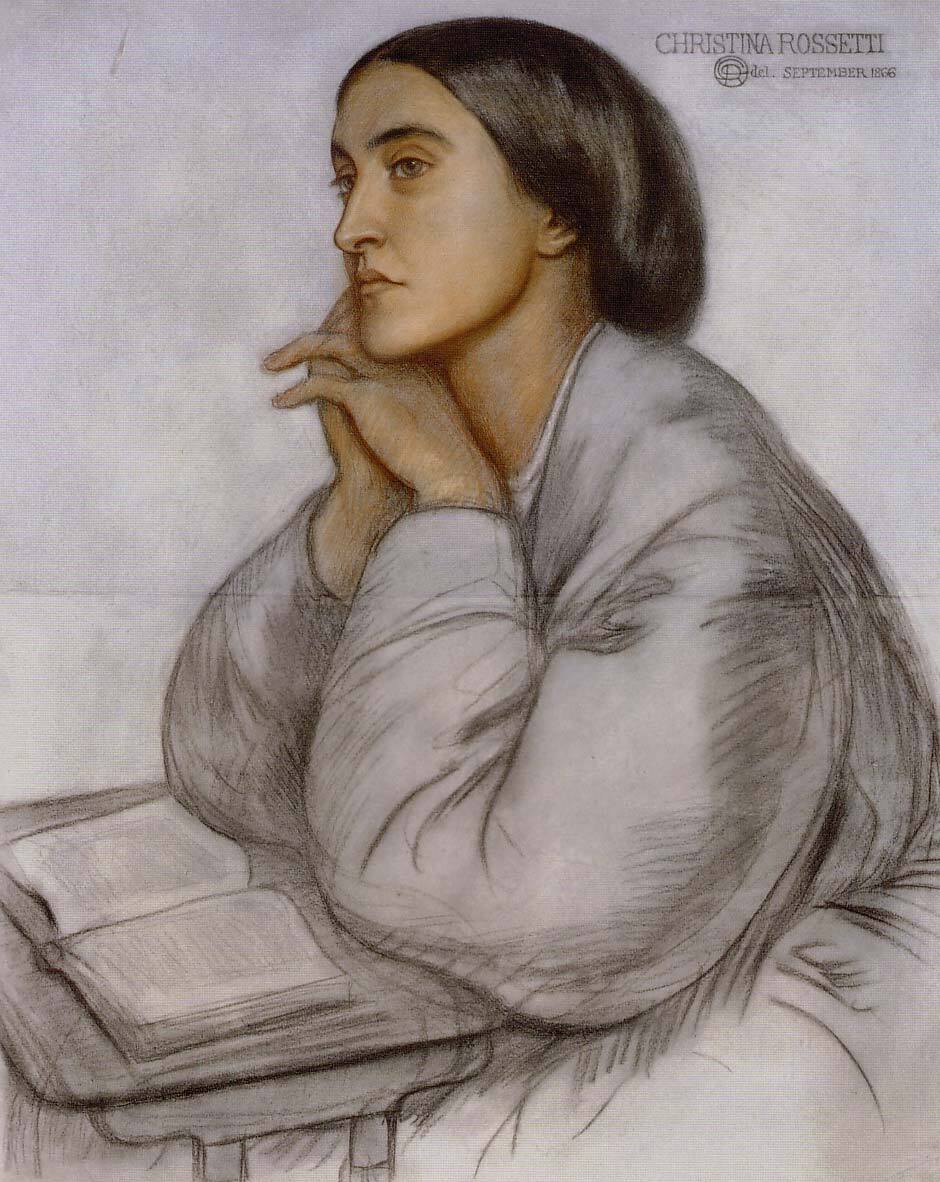
Christina Rossetti
1830-1894
Christina Rossetti is an English poet and younger sister to Dante Gabriel Rossetti. She achieved some recognition in her day as a female poet, claimed by some (if only by her brother) to be the next and greater Elizabeth Barrett Browning. Though she did do some drawing, she spent most of her efforts on poetry, especially of the Christian and devotional variety. She shared similar viewpoints and styles as her brother and those of the Pre-Raphaelite Brotherhood, with the presence of a clear Romanticism and medievalism. Yet, her attention to devotional poetry sets her somewhat apart from this group and those in similar circles. Even today it seems as if anthologies are reluctant to select her devotional poems, choosing her more secular poems instead. Regardless, her work is of great benefit to us today, and ought not to be ignored.
Passing Away
This poem contains more wisdom and meaning than what could be fully unpacked here. The poem is wholly unique in its form and substance, deserving its own extended study. It features three voices speaking to the author: the World, her Soul, and God, each starting their speech with "Passing away." Each stanza ends with a refrain, her verbal assent to what was spoken: "Yea." Even every single line has the same rhyme (a feat!). Though the word doesn't appear in the poem, it tastes very much like resurrection, death to life, Winter to Spring.
Remember
Another common thread in Rossetti's poems is the melancholy "posthumous" poem, to be read by those after her death. This sonnet is one of her most famous of these variety. It calls the reader to remember her fondly, to not grieve or despair. It is almost an opposite to her other poem of a similar focus, Song, which calls the reader to not grieve and to forget her. Regardless, this sonnet is a good reminder to remember the good of those that have passed, to be thankful for who they were.
Further Reading
- One of her most famous, longer poems is Goblin Market, a fairy-tale-esque story that has been interpreted to widely varying degrees.
- A Better Resurrection - One of the first poems that I read and loved by her.
- Marvel of Marvels - Another joyful-yet-somber poem, also boasting a single rhyme throughout all the lines.
- What Does the Bee Do? - A fun child's poem that I just found this evening reading to my kids!
Coo, coo, my quiet child
Abram Newcomer
This was a lullaby that I wrote over a year ago, longing for a child to read it to. By God's grace, we will have such a blessing in the new year.
As always, thank you for reading!
Discussion