



Your weekly slice of Historical Poetry
> Samuel Johnson
> William Cowper
> William Blake
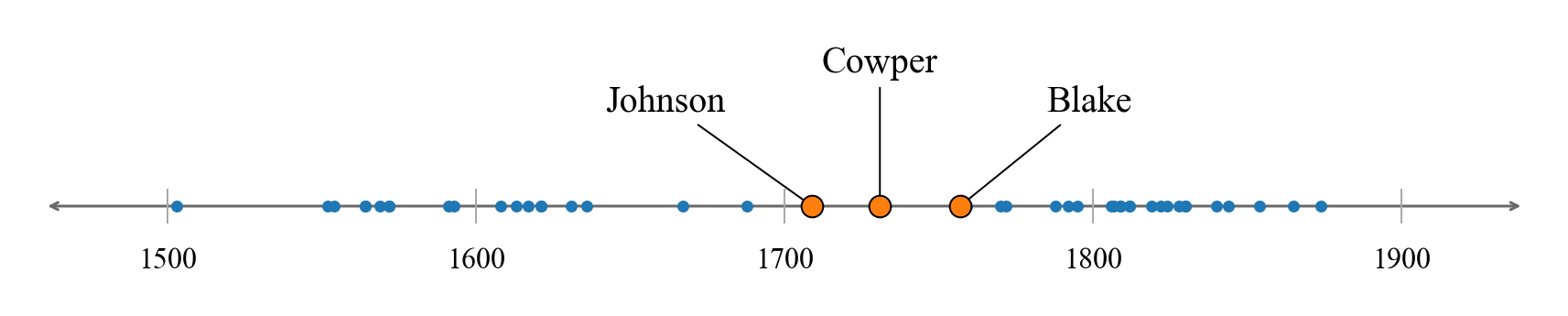
Welcome to the next edition of The Poets of History. We continue through the neoclassical era of poetry, though we are starting to smell the coming of the Romantic period. Some of these poets (especially William Blake) stand as precursors to the Romantic period, and so we can begin to see the shift in themes and style.
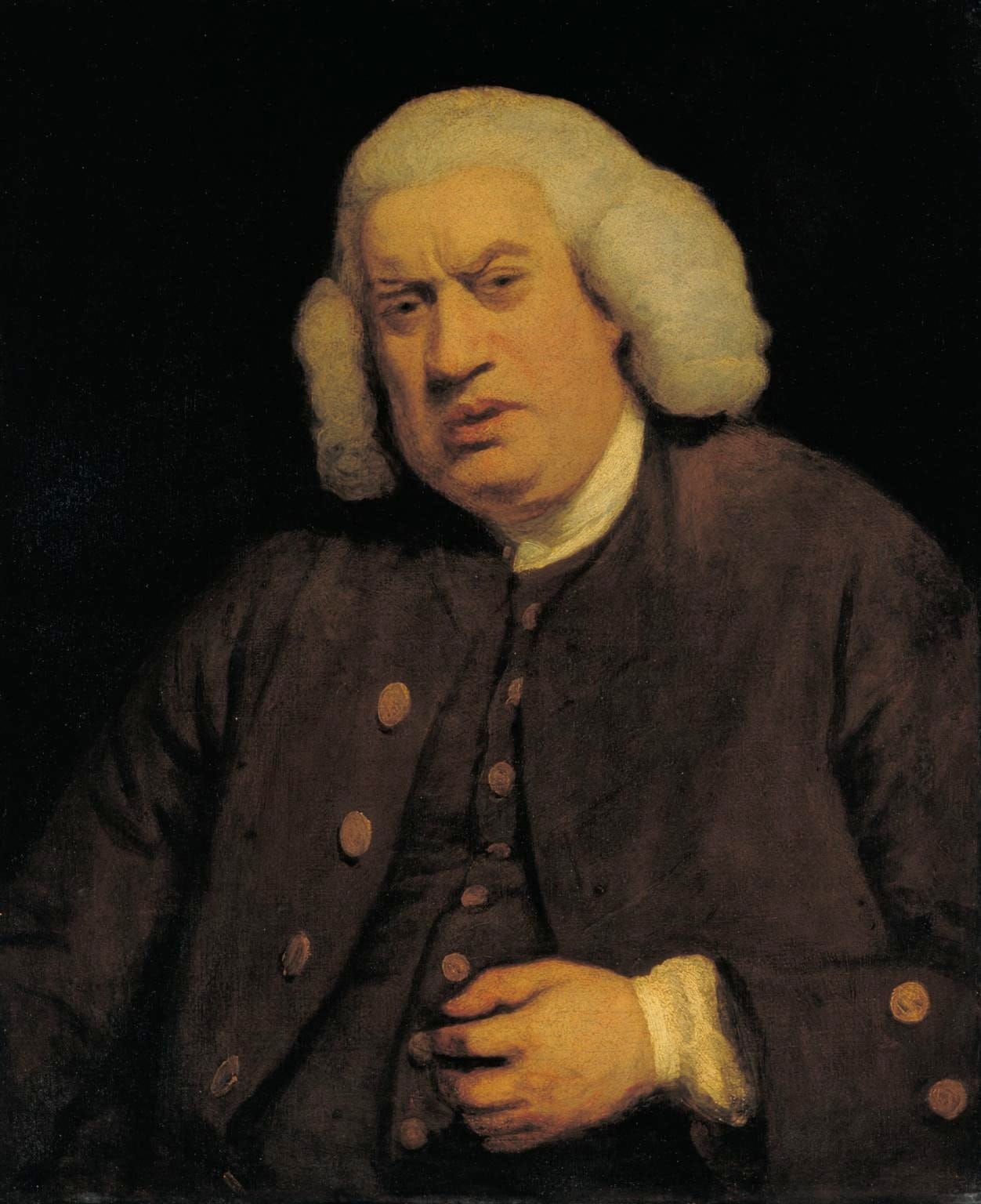
Samuel Johnson
1709-1784
Samuel Johnson was a prolific man of letters in his day, contributing to literature as a critic, poet, playwright, satirist, biographer, and even in creating a full dictionary of the English language. He was extremely well-read and contributed much to literary criticism in his own time and for the generations that followed. He was apparently quite tall and strangely mannered, having many (involuntary) tics that often made him uncomfortable to be around. Despite this, he was considered to be a great genius in his field and the subject of many biographies to follow.
One and Twenty
This poem celebrates the 21st birthday of a "Sir John," whom Johnson encourages to be free, to spend his (or his father's) money, and to enjoy the carelessness of youth. The poem has a very tight and flowing meter, written in trochaic tetrameter quatrains that are rhymed ABAB. Note that each of the B lines drop the final unstressed syllable, ending instead on a stressed syllable like a normal iambic line.
Further Reading
- On the Death of Dr. Robert Levet - Written on the unexpected death of a friend.
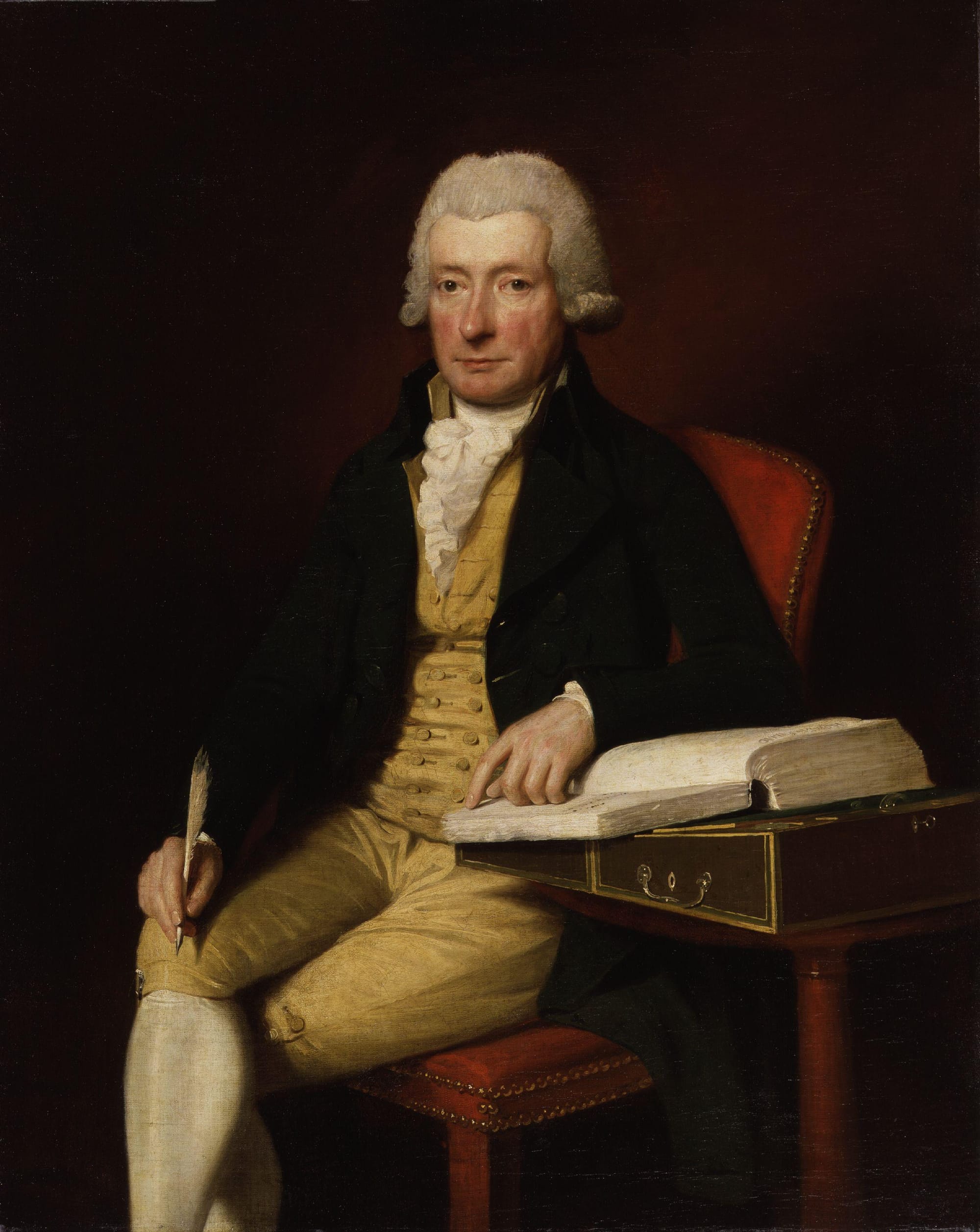
William Cowper
1731-1800
William Cowper is most well known today as being a hymnist, authoring both "There is Fountain" and "God Moves in a Mysterious Way" (which was first published as a poem titled "Light Shining out of Darkness"). Yet, he also wrote much poetry, much of which was well esteemed in his day. Tragically, Cowper suffered greatly from mental instability and depression, often having terrible dreams concerning his own salvation. Even in such weakness, however, his faith remained, and he produced beautiful hymns and poetry for those to come. I covered a few of his poems in this older edition of Poetry Pie.
Care for the Lowest
This text is an excerpt from Cowper's most famous, long poem: "The Task." It is written in the form of Blank Verse, with lines of unrhymed iambic pentameter. Within this excerpt you will find a compelling defense against needless animal harm. Animals may be killed when sufficient reason arises, but otherwise they should be left to enjoy their lives as we are ours. The idea has a slight Romantic sensibility to it, and it indicates him (along with his other poetry) as something of a precursor to the Romanticism that was to come.
Further Reading
- Conversation - A long poem that will be much loved and enjoyed by introverts near and far. Read the first strophe or excerpts and you will, no doubt, find some great lines.
- There is a fountain filled with blood
- Light Shining out of Darkness
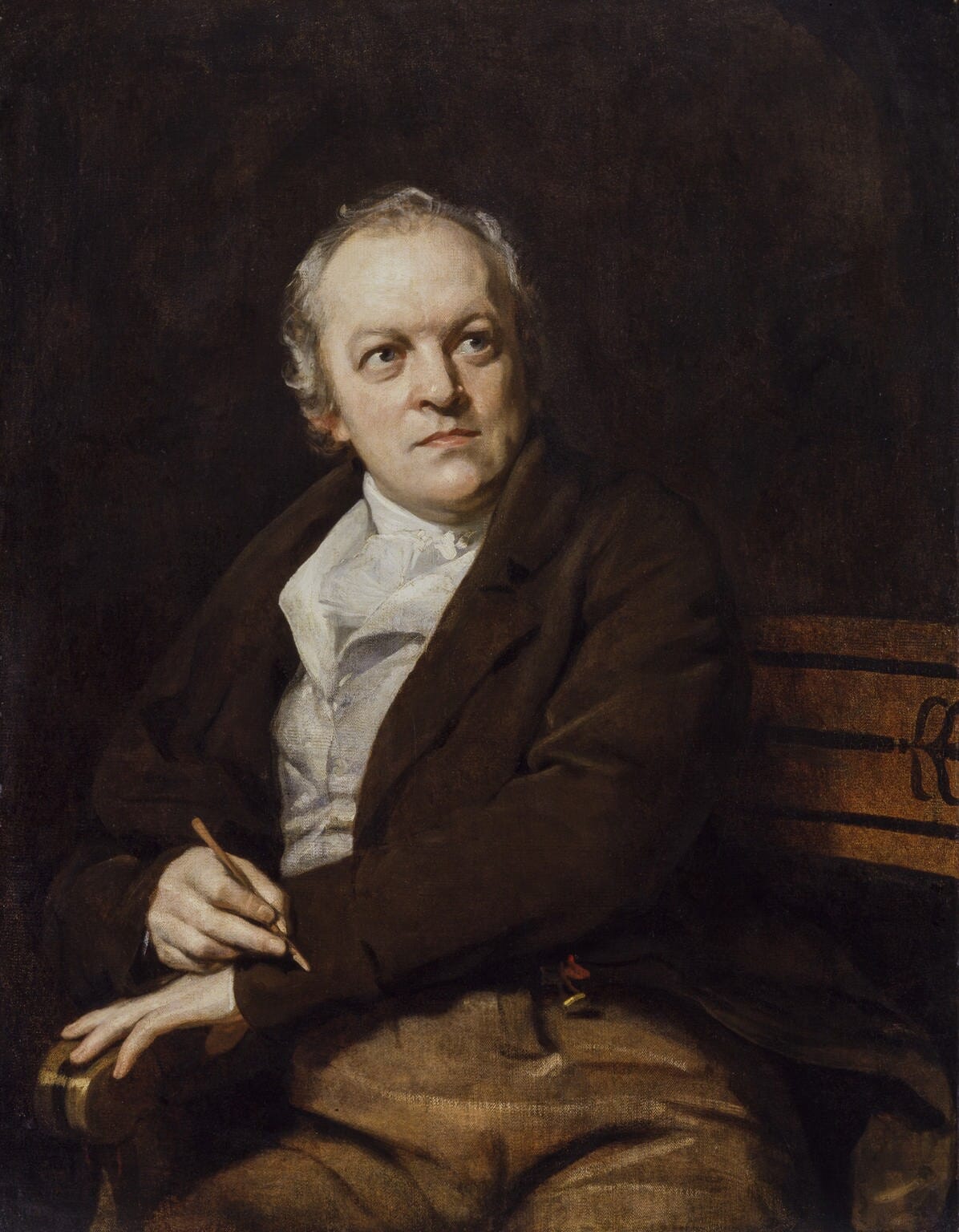
William Blake
1757-1827
William Blake was a poet and a painter, a unique figure in the progression of art history. He can be classified as a "Pre-Romantic," holding strong opinions that were considered quite radical to those of his age. He had a distinct style that blended religious, Biblical symbolism with deep mysticism and Romanticism. He wrote a considerable amount of poetry that is highly anthologized today, especially his two collections titled "Songs of Innocence" and "Songs of Experience." Many of these poems are very accessible to children, such as "The Lamb" and "The Tyger" (which begins "Tyger Tyger, burning bright...").
The Grey Monk
I first found the second- and third-to-last stanzas of this poem anthologized under the title "A Tear is an intellectual thing."
But vain the Sword and vain the Bow,
They never can work War's overthrow.
The Hermit's prayer and the Widow's tear
Alone can free the World from fear.
For a Tear is an intellectual thing,
And a Sigh is the sword of an Angel King,
And the bitter groan of the Martyr's woe
Is an arrow from the Almighty's bow.
These striking stanzas exist in a broader poem depicting a monk lamenting the cruelty of tyranny. This could have been inspired by the French Revolution and how the overthrow of one tyranny begat another. Note how you are thrust immediately into the scene with vivid imagery and emotion. Blake is a master of this descriptive writing, using rich and unexpected words to evoke a strong connection. The poem is written with iambic tetrameter lines in quatrain stanzas, rhymed AABB.
To Spring
This is a poem calling on the Spring to come and sweep through the land. It depicts England as waiting expectantly for this arrival, longing for Spring to come and bring its life with it. The imagery is quite exquisite, with rich personification. Though it is unrhymed, the poetry itself is beautiful in sound and meaning.
Further Reading
- The Chimney Sweeper - Despite being a poem from "Songs of Innocence," this poem is tragic and evocative, especially so as a father to a boy.
- The Lamb
- The Tyger
Righteous Lot
Abram Newcomer
I was recently re-reading the life of Abraham and was struck again to find God's mercy in the (second) saving of Lot.
But he lingered. So the men seized him and his wife and his two daughters by the hand, the LORD being merciful to him, and they brought him out and set him outside the city. (Gen 19:16, ESV)
This poem contains my confession to being a Lot myself, someone needing to be dragged from destruction by the mercy of Christ. Praise God that he does not leave us where we are!
I hope you enjoyed this edition of poetry. Take care!
Discussion