



Your weekly slice of Historical Poetry
> Robert Burns
> William Wordsworth
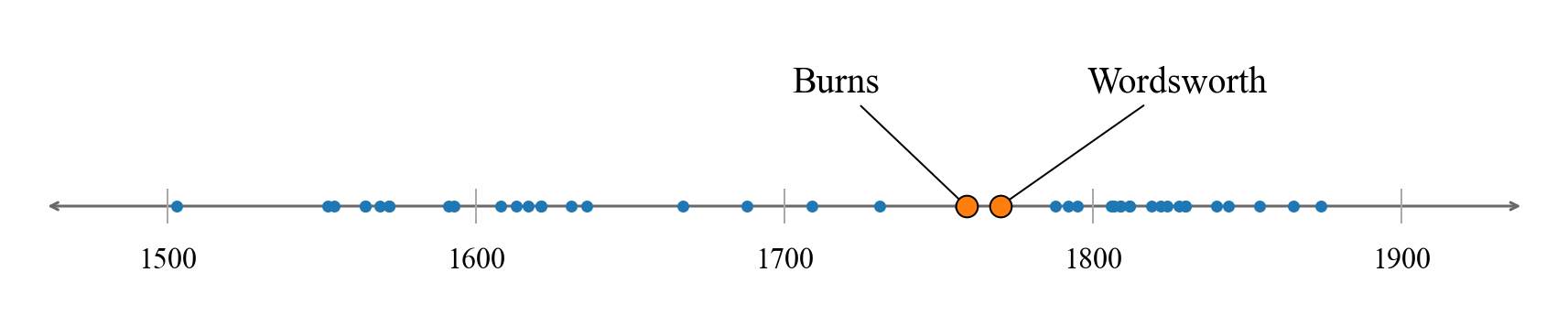
Welcome back to Part 11 of the Poets of History! I greatly enjoyed studying today's poets and am eager to share some great poems with you. As it was with the last edition, we are inching closer to the Romantic period, finally entering it in full with William Wordsworth. I hope you enjoy!
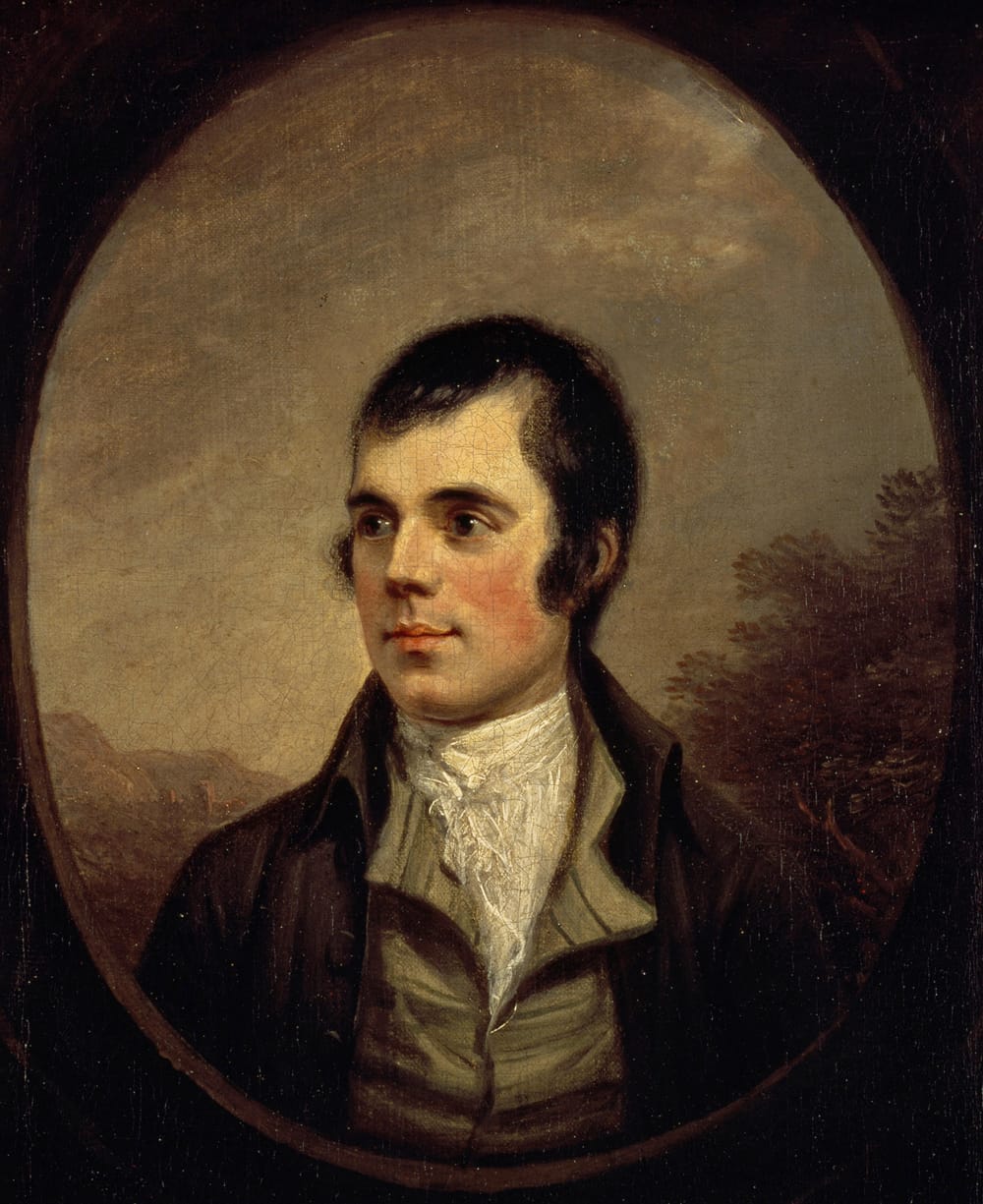
Robert Burns
1759-1796
Robert Burns was a Scottish poet, considered by many to be the national poet of the nation. He grew up in both poverty and hard, manual labor, and, as such, his poetry represents the everyday, working man's life. These poems are witty, heartfelt, and insightful into the human condition and society. As others in this time, his poetry is seen as a precursor to the Romantic movement, often involving a close connection with nature and the world. He wrote most of his poems in Scots (the Scottish dialect) which, similarly to Middle English, can usually be understood when reading aloud. He is responsible for "Auld Lang Syne" and so many other great poems that it was a bit of a challenge to decide on which ones to share. I believe the two below, however, will be good choices to showcase his writing.
Highland Mary
This poem is tender, sweet, and sorrowful, recounting the (true) relationship he had with a woman named Mary, who died suddenly when they were apart. It is written in a ballad verse style, with alternating lines of tetrameter (4 feet) and trimeter (3 feet). It slightly varies from this form in that the trimeter lines all end with an extra unstressed syllable, called a tag. He may have chosen this so that he could easily end each stanza with "Highland Mary."
As I was reading this, I could not help but see it as being thematically similar to Poe's "Annabel Lee" (perhaps Poe was influenced by him). There is the description of the love that the author shares with a woman, the loss of that woman, and the lingering grief over this loss. It's interesting to note that there are no detailed descriptions of Mary herself in this poem, only descriptions of the setting, their love, and his grief. Burns endears you to this woman not by a laundry list of qualities, but simply based on the tenderness of his love for her.
To a Mountain Daisy
Here we find an excellent example of the poem that takes a scene from nature and connects this with a truth for our lives. Mowing is not an uncommon scene for a poem—Marvell's poems about Damon the Mower and Frost's The Tuft of Flowers comes to mind. (What else is one to do while mowing all day except think about poetry?) This poem presents a deep and mature discussion on the fleeting nature of life, represented by both the flower that is cut down and by the lives of every person. He connects this truth to different examples of people (the "maid," the "bard," etc.), and ends by pointing at you... yes you who were reading the poem. No solution is provided, no neat bow is put over it. You are meant to feel its finality and the apparent finality of death.
There's a lot to find here, but one thing I come away with is a sense of the noble bravery of this daisy. This passing flower has the courage and joy to live in the midst of a death-filled world.
Cauld blew the bitter-biting north
Upon thy early, humble birth;
Yet cheerfully thou glinted forth
Amid the storm...
The poem is written in sestet stanzas, rhymed AAABAB. The A lines are tetrameter and the B lines are dimeter (2 feet).
Further Reading
- A Red, Red, Rose - I know this poem primarily because my mom would often quote it to me (though I never quite understood what it meant for a sea to "gang dry").
- To a Mouse - If the only thought you've ever had about a mouse is "eeek!", then this poem may be enlightening.
- For a' That - A great social commentary written in a winsome form.
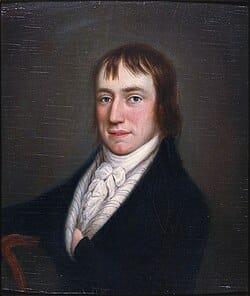
William Wordsworth
1770-1850
William Wordsworth was an English poet who was fairly influential in the beginning of the Romantic movement. He, with Samuel Taylor Coleridge (who we'll cover in the next edition), wrote the Lyrical Ballads, which championed the goal of writing poetry using the language of the people rather than the scholarly, intellectual voice that characterized the Neoclassical movement. Wordsworth enjoyed recognition later on and was eventually appointed the Poet Laureate of England near the end of his life. His poetry contains much of the Romantic sentiments, such as a sympathy with the poor and the common, and the goodness and purity of nature.
The Solitary Reaper
This poem pairs well with Burn's Highland Mary, decorated with its very own "Highland lass." In it, we find a scene in which Wordsworth observes a woman working out in the field, singing to herself. This mysterious "melancholy strain" captures his attention considerably, binding itself to him long after he leaves. I quite enjoyed the scene in this poem, agreeing that hearing a woman's song in nature adds a glory to the world that first began with Eve in the garden.
The World Is Too Much With Us
This is a well-known sonnet about nature and the connection that humanity has with it. It bemoans the greediness with which we often misuse nature for our own gain, something that was becoming increasingly relevant with the rise of the Industrial Revolution. As a Christian, I always felt a little uncomfortable with the ending, where he claims that it would be better to be as the pagans of old, seeing nature as the playground of the gods rather than a lifeless, mechanical matter to be used for profit. Yet, the point is still true in many ways; nature is the theater where divine action takes place, the place we are meant to both steward and enjoy.
Further Reading
- Lucy (I) - This is a series of heartfelt poems about a fictional woman who passes away.
- I Wandered Lonely as a Cloud - Another famous, beautifully described scene of nature.
The Pale Rose
Abram Newcomer
This sonnet was written for my wife around a year ago. Throughout her adult life she's struggled greatly with chronic illness and physical pain. God has continued to impress me with her beauty even in this hardship, and I'm honored to be able to walk with her through it all. She may not like her paleness (and we still pray for more color in her petals), but in the mystery of God's design, he is making her more beautiful than she would be otherwise.
Thank you for reading this week's edition of Poets of History. Have a good week!
Discussion