



Your weekly slice of Historical Poetry
> Richard Crashaw
> Richard Lovelace
> Andrew Marvell
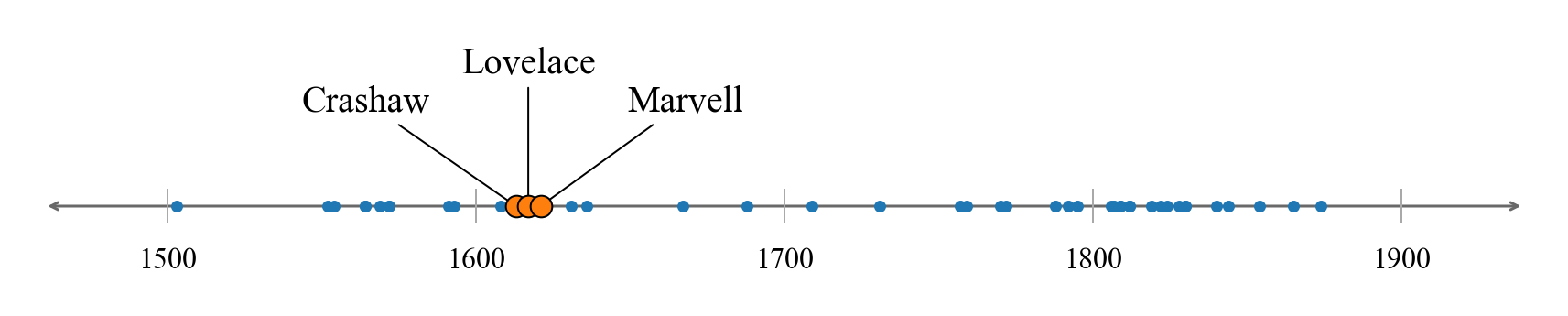
This week of Poet's of History feature not two, but three poets! To fit the proper amount of poets into this yearlong, 21-part series, I had to combine a few poets together. For the sake of your time, I still only feature 4 poems in total, so two poets will only have a single poem discussed.
Regardless, this week's selection of poets are all contemporaries who had adjacent styles. As you will see, some of these poets fall under the metaphysical label that we've discussed in previous editions (à la Donne and Herbert). I had never read Crashaw or Lovelace before this week, and I was quite delighted in what I found. I hope you are too!
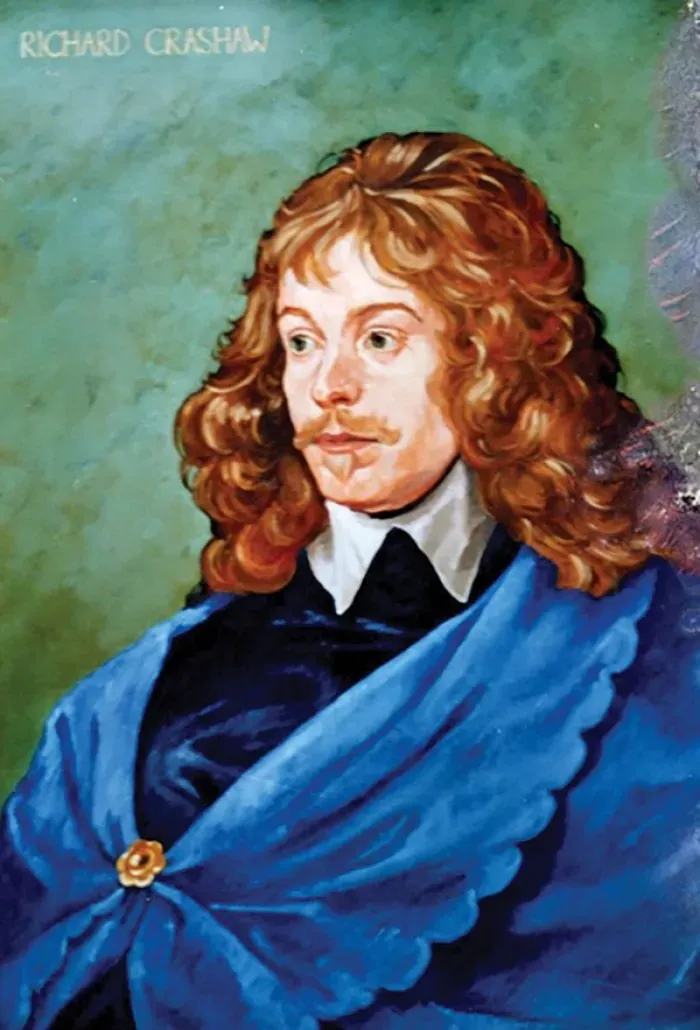
Richard Crashaw
1613-1649
An Anglican cleric-turned-Roman Catholic, Crashaw is considered to be one of the foremost of the metaphysical poets, despite not being very well known today. His poetry matched his clerical style: lofty, stylized, and bordering on the mystical. This "High Church" manner worried his Puritans contemporaries a fair bit until he resigned and eventually converted to Catholicism.
His poetry contains strong imagery and often far-reaching conceits (i.e. metaphors), all bundled in exceedingly musical forms. As many other poets of this time, his poems often contain lines of differing lengths, each which create interesting rhythms. I found that I enjoyed his poetry quite a bit.
The Weeper
This poem took me a few reads to fully understand. It is a poem with Mary Magdalene at the center, washing the feet of Christ with her tears. In terms of the conceits involved, you can see how far we actually extend from this scene in the Gospels. There are springs and rivers, stars, cherubs, dew on the field, the Queen, the sun... There is so much that you don't really understand the concrete of the poem until the final stanza (actually, the last 3 words):
We go not to seek
The darlings of Aurora's bed,
The rose's modest cheek,
Nor the violet's humble head.
No such thing: we go to meet
A worthier object—our Lord's feet.
Some may critique these metaphors as being stretched too far. That's for you to decide. For myself, I enjoy the surprise of a unusual connection; the work of tying it all together is satisfying.
Regardless, the musicality of the poem is wonderful. There is plenty of alliteration and assonance to be had, often extended throughout the entire stanza. The meter is unusual in that each stanza contains lines of lengths 3-4-3-4-4-4, rhymed ABABCC. The first four lines are almost a reverse ballad stanza (4-3-4-3), which is then rounded out with the couplet rhyme at the end. It doesn't stutter, but flows seamlessly until the end.
Wishes to his (Supposed) Mistress
Here is an extended love poem to a woman, featuring a unique stanza formation as well. Each stanza here is a tercet (3 lines), and the lines grow in length from dimeter (2 feet), to trimeter (3), to tetrameter (4). All three lines are rhymed as well. As before, the poem flows quite well for a modulating rhythm like this. It also contains similar flourishes in sound and music.
Further Reading
- A Hymn to the Name and Honour of the Admirable Saint Teresa - This is one of his most famous poems, one of three written in honor of Saint Teresa. Read at least the first couple stanzas to enjoy his writing!
- Verses from the Shepherds' Hymn - A nativity poem written with similar uniqueness.
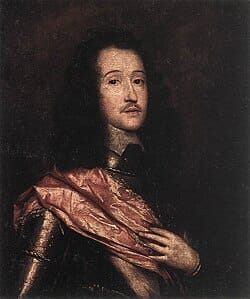
Richard Lovelace
1617-1657
Lovelace was a "Cavalier poet", one who supported the reign of King Charles I in a time of political and religious tensions. He served as a soldier for the king and a courtier, resembling something similar (though undoubtedly lesser) to Sir Philip Sidney in his time. His poetry contains many elements of honor and virtue, of love that is undaunted by hardship.
To Lucasta, Going to Wars
This is one of Lovelace's most famous poems, almost always to be anthologized. Addressed to his lover while heading off to war, it asks her not to begrudge him his duty to his country and his king. He plays things out to be as if he is running to another woman ("a new mistress now I chase"), namely war and honor. If he was not honorable and stayed back, he would not be able to love her. It is written in the standard ballad stanza style, rhymed ABAB.
Further Reading
- To Althea, from Prison - The other poem most often anthologized with the one listed above.
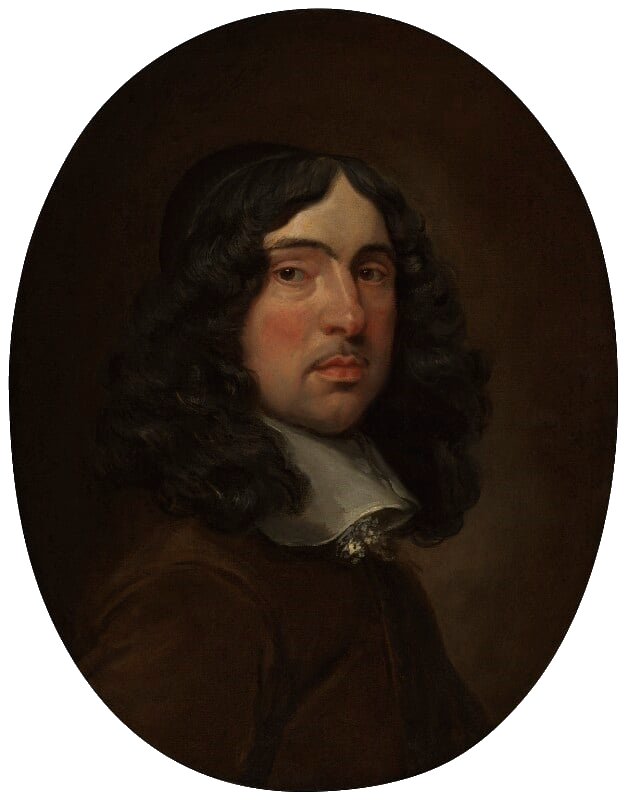
Andrew Marvell
1621-1678
Marvell was another one of the main metaphysical poets, writing on various topics, religious, romantic, and political. He was acquainted with John Milton through their political offices, and lived through the tumult of the execution of King Charles I and the restoration of the monarchy. Some of his most well-known poetry centers on garden imagery, which will be demonstrated in the selection below. Since I've shared his poetry in the past, I'll only share a single of his today.
The Garden
This is a fitting poem for May! It contains a beautiful validation of the desire to be in nature, to be surrounded by the good of Creation away from the busyness of the world.
Fair Quiet, have I found thee here,
And Innocence, thy sister dear!
Mistaken long, I sought you then
In busy companies of men;
It is written in octet stanzas of iambic tetrameter, rhymed in couplets pairs. As in all his poetry, he sticks very closely to the meter.
Further Reading
- The Coronet - My favorite of his poetry, the ending line of which is exceptional and, perhaps, a good tie-in with Crashaw's "The Weeper" linked earlier.
- Damon the Mower - He has a series of poems centering on Damon, the mower. They each blend a comedic melodrama around his frustrated love for Julianna.
The Ambush
Abram Newcomer
This poem was written almost a year ago, another fitting one for the month of May. It's not too serious, though it was fun to write and, hopefully, still fun to read.
I hope you enjoyed these selections. Take care!
Discussion