



Your weekly slice of Historical Poetry
> John Donne
> Robert Herrick
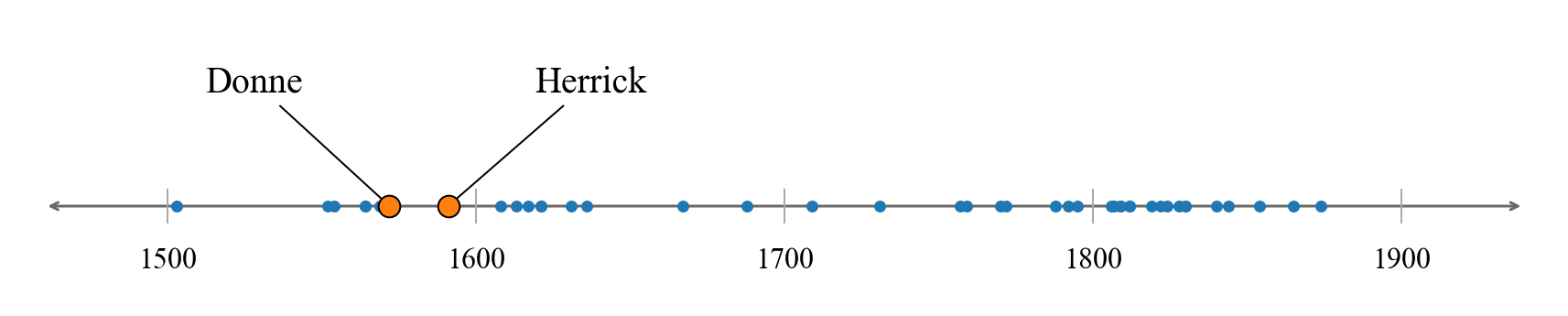
After taking a short break for Easter, we return again to our Poets of History series. We are just now leaving the 16th century and beginning to see the influence of the earlier poets that we have already discussed. Today's poets are ones that I've greatly enjoyed in my own reading, and I hope you will enjoy them as well.
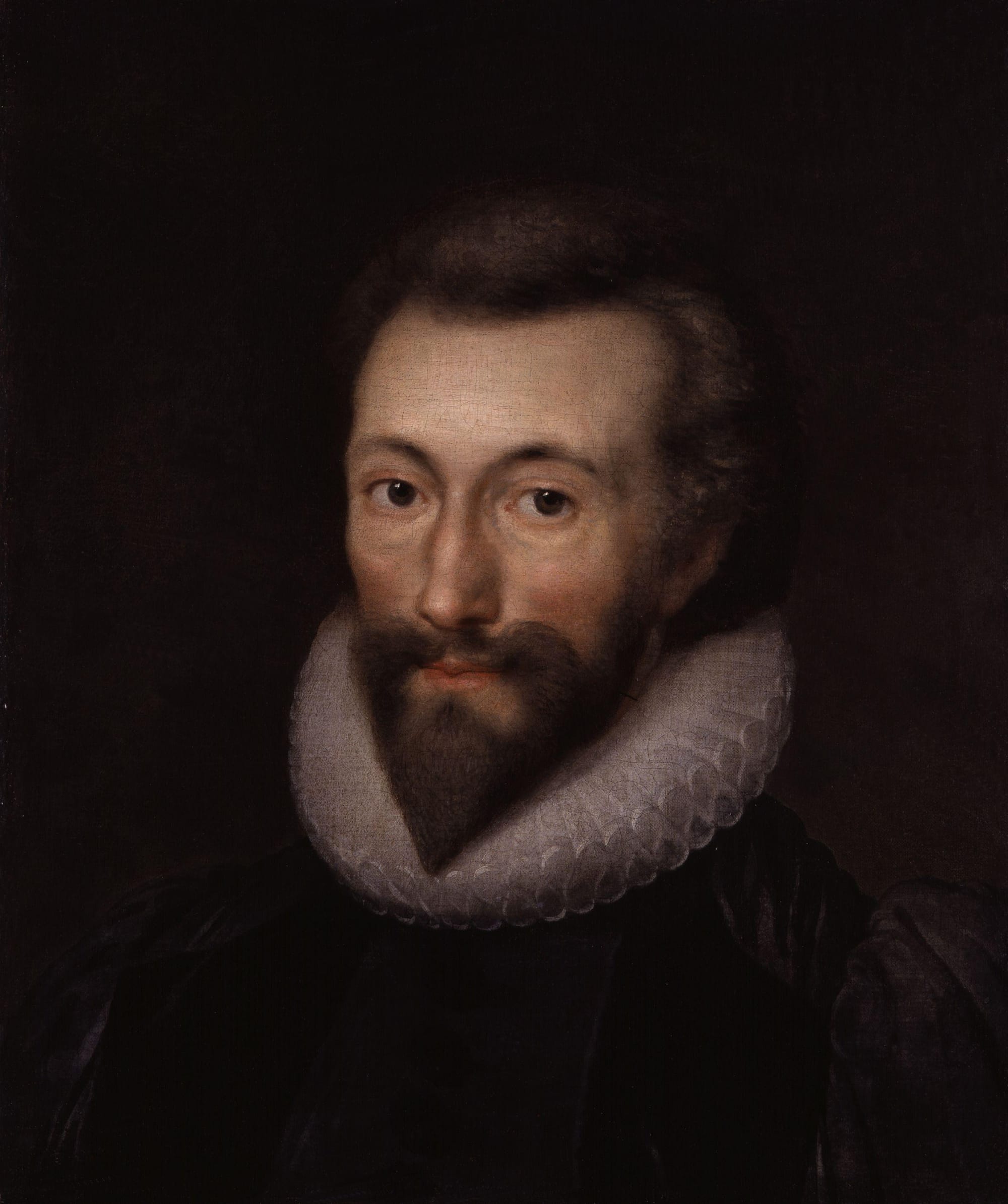
John Donne
1572-1631
John Donne ("dun") was an English poet and, later in his life, an Anglican cleric. He is often taken as the figurehead for the "metaphysical poets," a grouping of poets who are characterized by using extended and unexpected metaphors. These "conceits" often take two extremely unlike images and draw them together in a striking metaphor. Donne is a clear master of this, seen in almost all of his poetry. Whether he is comparing himself at the doctors to a map spread on a table, or his lover to America in which he is exploring, these metaphors break through the cliché and arrest your attention. He also speaks in ways that are very clear, despite having such complex ideas. His phrases and words are close to reality, physical – you can feel and see what he writes. In this way, he is an exceptional poet, carving a path that many poets would follow afterwards.
His canon of poetry contains many different styles. He has a fair bit of love and even erotic poetry, satires, elegies, and religious poems. His Christian poetry is profound and quite invested in Biblical imagery, best seen in his collection of Holy Sonnets.
Holy Sonnet 5: I am a little world
It's difficult to pick a single Holy Sonnet to share, especially avoiding those that are almost always anthologized (such as Death be not proud and Batter my heart). Yet this one is wonderful, demonstrating much of what characterizes Donne's sonnets.
He uses the extended metaphor of comparing himself to a world; each sub-image fits within this metaphor. He is a world made of elements (body) and spirit, yet both are spoiled by sin; both must die. He prays that "new seas" would be poured into his eyes, to either drown or wash his world (think of Genesis and the waters covering the earth). Yet he then switches suddenly from water imagery to fire.
But oh it must be burnt...
His world has been burned already by lust and envy. Yet he prays that it would be further burned with a zeal for the Lord and for his house (Ps. 69:9), which, contrary to what fire always does, heals that which it burns. This is the solution to the death that he deserves: he must be washed and drowned, he must be burned over, all so that he may be healed.
What a ride! You can see how this is much different from the sonnets that we've read so far. He's take the form and used it not only for a religious (rather than love) subject, but he has done it using far-reaching imagery and meaty Christian thinking.
The Sun Rising
This poem is much less deep, though a great example of his love poetry. Not addressed to his lover, rather this poem is a rebuke to the sun that has bothered to wake he and his lover up in the morning. He carries on, chiding the sun that neither its light nor all the treasures of the world can compare with the pleasure and happiness they have in their room.
You may note in this and in his sonnets that his poetry isn't overly musical. It does rhyme, of course, but the language and meter often match closer to regular speech than song. This is a distinct style of his. In my opinion, you remember him more for his brilliant thoughts and metaphors than for his lyricism.
Further Reading
- Holy Sonnet 15 - Another beautiful sonnet with a fantastic conceit concerning a man that has been robbed.
- You can read all the other Holy Sonnets here.
- Resurrection, Imperfect - An unfinished poem about Christ's resurrection, written in rhyming couplets of iambic pentameter.
- Woman's Constancy - A poem addressed to a woman he is accusing of being inconstant.
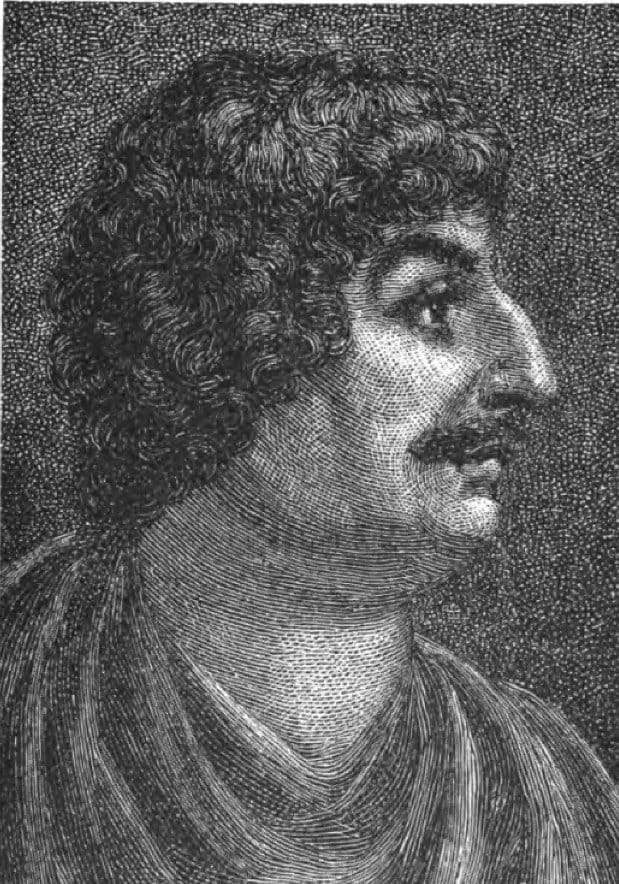
Robert Herrick
1591-1674
Robert Herrick was a lyric poet who was a proud member of the "Sons of Ben," a group that admired Ben Jonson. His poetry covers a wide range of themes, though mostly centering on pastoral, country-side scenes. They often involve a recognition of the shortness of this life and the need to enjoy it while we can, seen in his many poems addressed to flowers. He has a considerable skill in crafting stanza forms that contain lines with varying length, as opposed to stanzas where all the lines are of equal length (e.g. tetrameter, pentameter).
To Music
This poem is a good example of his poems of address, written "To..." something. It features the varying line length that characterizes many of his poems. In this example, each stanza has 11 lines with the following lengths: 43432232221. This custom meter gives the poem a unique rhythm when read aloud. The first four lines follow a traditional ballad meter (4-3-4-3) and they each provide the initial statement for each stanza. What's interesting is that the math for the remaining lines still work out to a similar 4-3-4-3 arrangement: (2-2)-3-(2-2)-(2-1). What fun! How fitting is it that he praises music for its "delicious numbers," something exemplified in the poem itself.
The Bracelet: To Julia
Herrick has a few poems that are addressed to a (likely) fictitious woman named Julia, a practice common among poets of these generations. (What great imaginations men have.) Regardless, we here find a lovely little poem describing the captivity that a woman can have over a man. This is also interesting in that it is rhymed in tercets (every three lines), which is not as common.
Further Reading
- Corinna's going a Maying - One of his most famous poems, calling a girl to come forth and enjoy May.
- To Violets - Another poem with an interesting metrical structure.
- To Blossoms - A poem featuring the theme on the brevity of life.
- To the Virgins, to Make Much of Time - Another one of his famous poems, calling women to seize their youth, enjoy it, and marry.
Pour Me Life
Abram Newcomer
Since we read some of Donne's Holy Sonnets, I'll include one of my own sonnets that was inevitably influenced by him. This sonnet was written during the poetry class that I took in college. It is a prayer to God, for his mercy in the face of my repeated sin.
Thank you for reading! As always, I hope it was enjoyable to see these different styles and how they have been developing through these early decades. Until next time, take care!
Discussion