



Your weekly slice of Historical Poetry
> Christopher Marlowe
> William Shakespeare
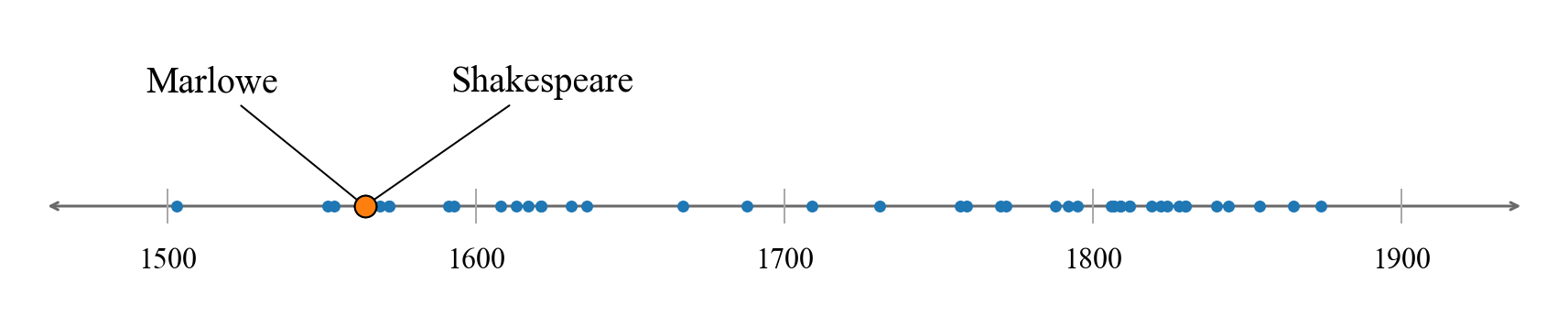
We continue on our journey through the Elizabethan period of English poetry, focusing on two poets who were famously born in the same year. Both authors contributed to English literature as both poets and playwrights. As such, one of their poems will be an excerpt from one of their plays. Enjoy!
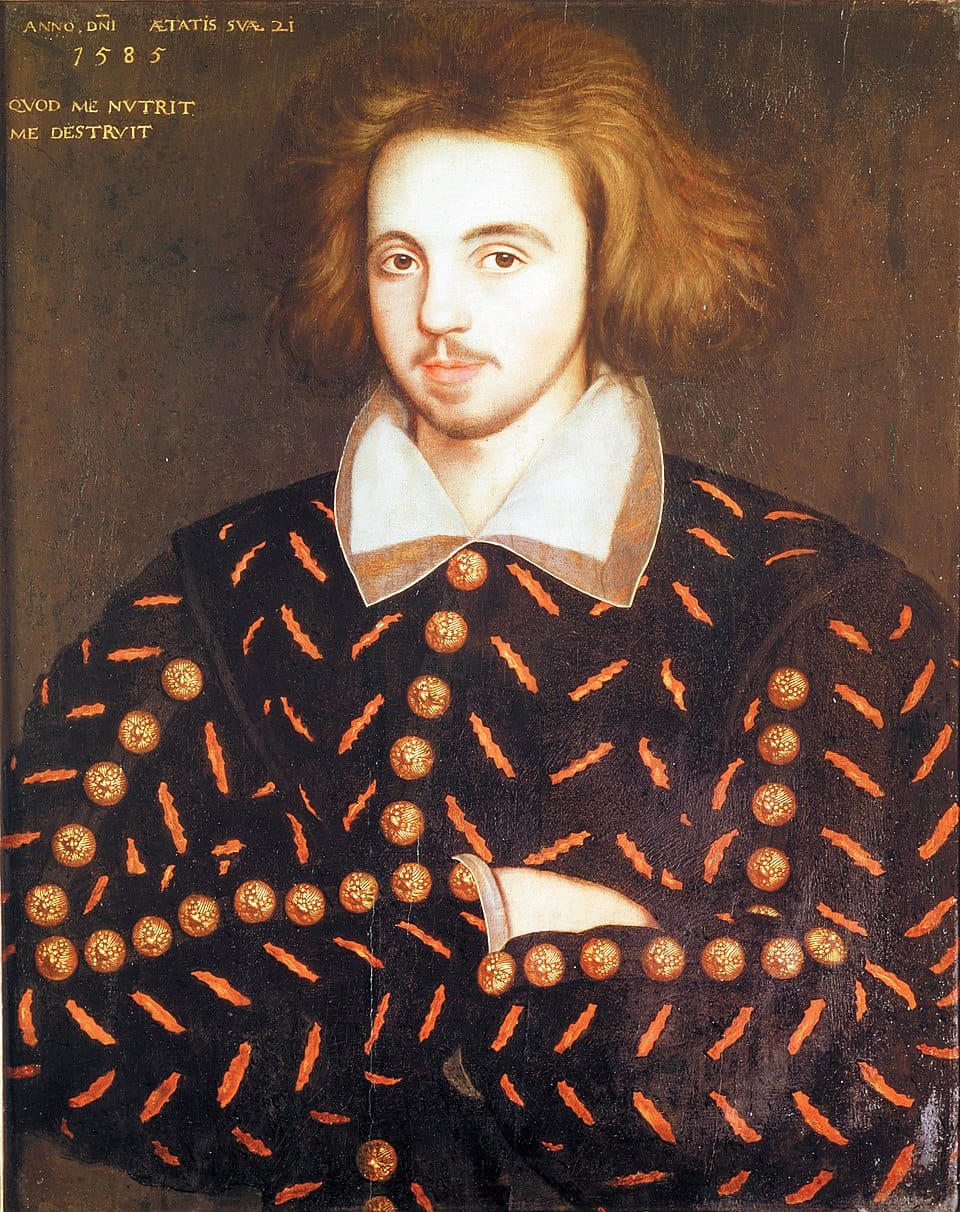
Christopher Marlowe
1564-1593
Marlowe, along with Shakespeare and Ben Jonson, is considered one of the foremost playwrights of the Elizabethan period. Despite an early death in a bar fight at the age of 29, he wrote a number of influential plays and potentially influenced Shakespeare himself, who would go much further. He is said to have popularized Blank Verse poetry, in which lines of iambic pentameter are unrhymed, typically used for narrative style poems.
The Passionate Shepherd to His Love
The title says it all for this frequently anthologized poem. Here we have a poem in the often-used pastoral setting: a shepherd in the field wooing his love. The poem is sweet and idyllic. The shepherd describes all the things that he will make for his love with the materials surrounding him: a bed, a cap, a kirtle, gown, slippers, and a belt. The first line serves as something of a refrain that is repeated later and at the end of the poem: "Come live with me and be my love." As we approach Spring ourselves, this imagery is quite delightful and a joy to live within.
Was this the face that launched a thousand ships?
As one of the great, mythologized beauties of history, Helen of Troy is the subject of many a poem of praise. We find such praise in this excerpt from Marlowe's tragic play, "Dr. Faustus." It is a great example of the blank verse style as the lines are unrhymed, iambic, pentameter, and narrative.
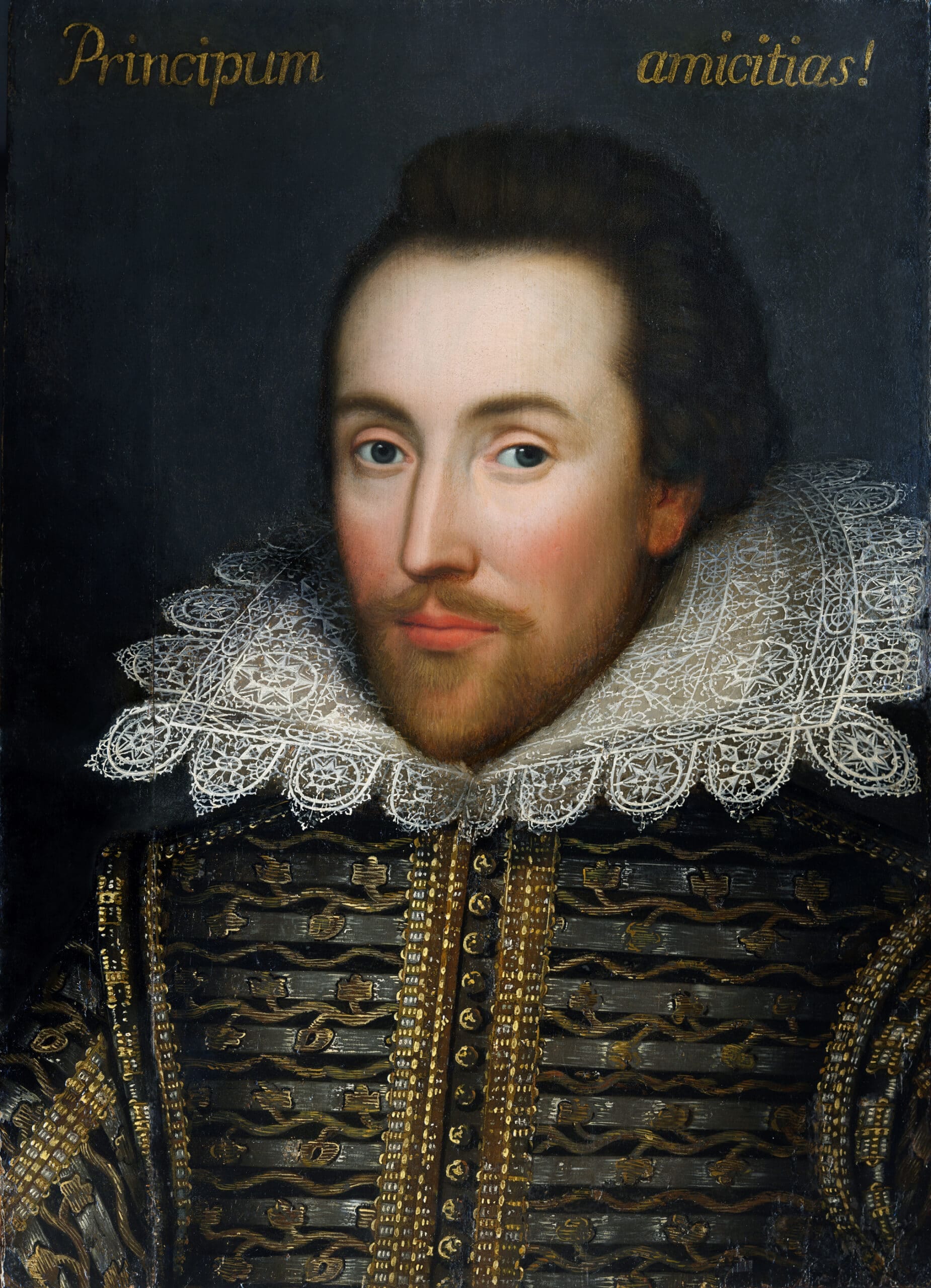
William Shakespeare
1564-1616
Shakespeare is easily the most famous English poet to ever live. He was proliferous in sonnets and plays, completing over 150 sonnets and 39 plays respectively. His poetry contains the full spectrum of good writing: wit, thoughtfulness, humor, tragedy, insight, and true human motivations. It is not merely impressive that he wrote so many plays, but that he wrote so many good plays, all brimming with notable, unique characters. His love sonnets are clever and well-designed, perfecting the form and advancing it further for future generations of poets.
Sonnet 54: O, how much more doth beauty beauteous seem
It's a bit unfair to have to choose a single sonnet from Shakespeare to share. There are the many well-known sonnets that most of you have heard to death ("Shall I compare thee to a summer's day?", "Let me not to the marriage of true minds..."), so I tried to link one that may be less known.
As with many of his sonnets, this one makes an initial claim and spends the rest of the poem supporting it with a real-world example. His claim: beauty is made complete with truth. The rose is beautiful, yet it is also perfumed and pleasant in its death, unlike the equally-red "canker-blooms". Yet he does not leave this discussion abstract, but ties it finally into the beauty of the "youth," whose perfume of truth lives on in this sonnet.
A Shakespearean sonnet will contain the following rhyme scheme: ABAB CDCD EFEF GG. While Shakespeare didn't invent this rhyme scheme (it is likely that Wyatt did), he perfected it to the point that it now bears his name. He was a master of the final couplet, often ending in a witty or punchy conclusion. Consider this ending from Sonnet 116 as a prime example:
If this be error and upon me proved,
I never writ, nor no man ever loved.
The quality of mercy is not strained
This famous speech from "The Merchant of Venice" is a great example of Shakespeare's mastery of the memorable oration. While this exists in the context of a court scene, the speech is general enough that it can be taken on its own. Just as with Marlowe's "Was this the face...", this is written in blank verse.
Further Reading
- Take, oh take those lips away - A short song excerpted from "Measure for Measure"
- Sonnet 29: When, in disgrace with fortune and men’s eyes - One of my favorites
Concerning Water
Abram Newcomer
This sonnet was just recently written and published, based on an idea that I've had for a while. It occurred to me (while playing outside with my kids in the snow) just how many forms water takes in our world. I think this shows God's playfulness and his love for getting the most out of the things that he has made. Thank God for water!
I hope these poems were delightful to you, and I will see you in two weeks!
Discussion