



Your weekly slice of Historical Poetry
> Aemilia Lanyer
> Ben Jonson
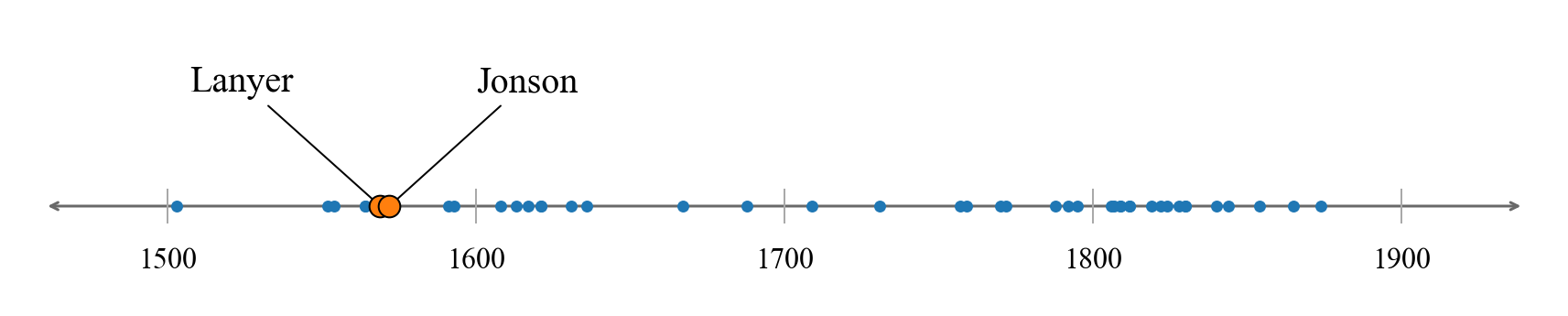
Welcome back to another edition of the Poets of History. We are still making our way through the Elizabethan period, this time featuring a lesser known poet along with a poet in similar ranks as Shakespeare. I hope you find this exposure interesting!
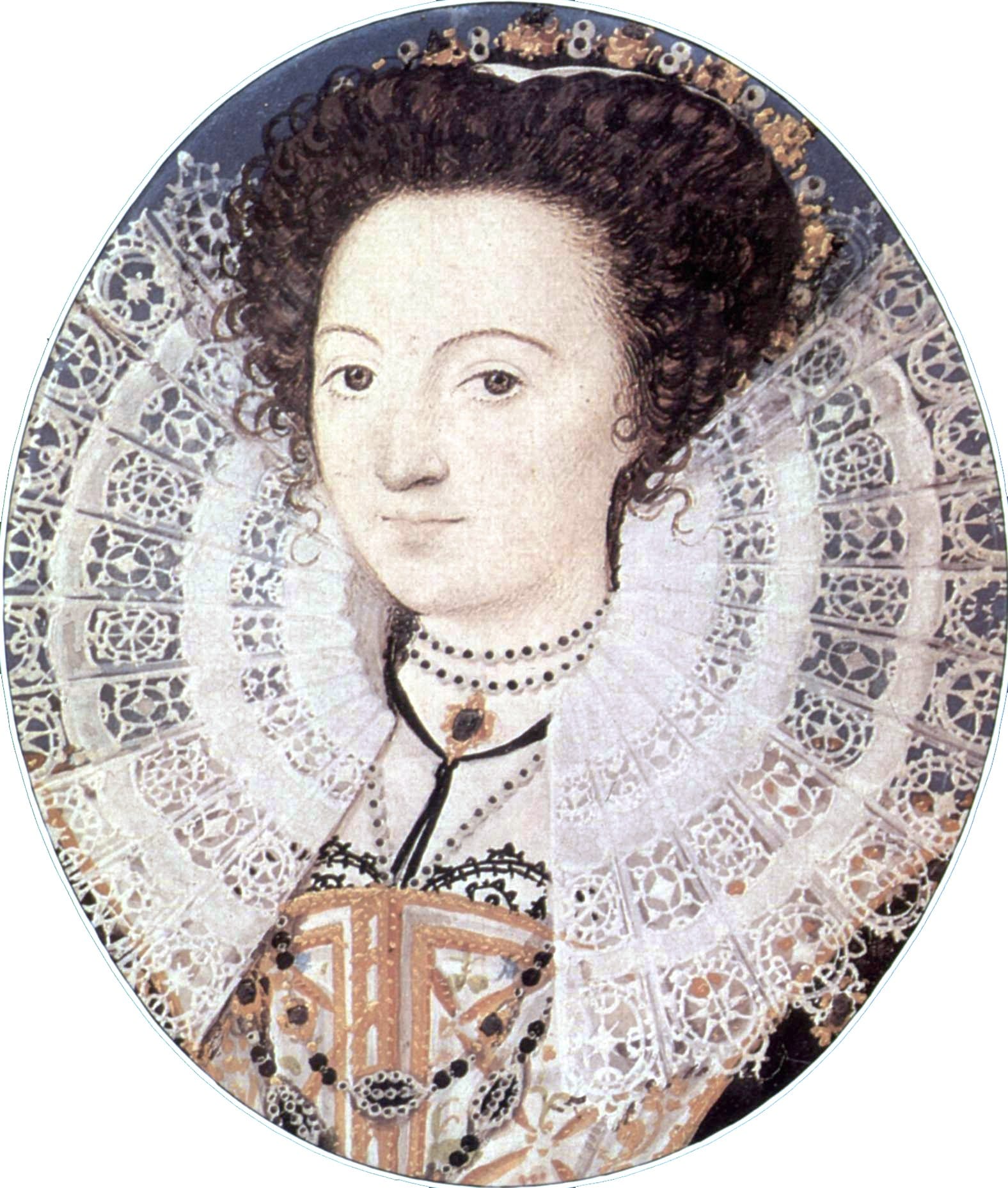
Aemilia Lanyer
1569-1645
While not being the first woman to have her English poetry published, Aemilia Lanyer is quite close in being the first to publish a large volume. This volume, which appears to be all of her writing that has survived, is called Salve Deus Rex Judaeorum ("Hail God, King of the Jews"). It contains multiple poems, including an extended depiction of Christ's crucifixion and a defense of Eve. Excerpts from these portions are shared below.
Lanyer's writing is considered by many to contain some of the first identifiably feminist ideas, specifically to be seen in her defense of Eve and her dedication of the volume to patron women. While this ought to be considered, we should probably be careful to not import all the beliefs of our modern feminism onto her.
The Passion of Christ
What is linked above is a bookmark to when her description of the Last Supper and Christ's crucifixion begins. The poem in its entirety is written in ottava rima, in which are eight-line stanzas of iambic pentameter, rhymed ABABABCC.
The full Salve Deus is quite long, but it's enjoyable to at least read a few stanzas from the different sections as you go along. It reads as a step-by-step walkthrough of the Passion, starting at the conclusion of the Last Supper. As Good Friday and Easter is soon approaching, reading these stanzas does well to place us in the right frame of mind. These are a few of the lines that are quite good:
Thou knew'st they had no powre to doe thee good,
But were the cause thou must endure these blowes,
Beeing the Scorpions bred in Adams mud,
Whose poys'ned sinnes did worke among thy foes...
...So full of Loue, so free wert thou from hate,
To bid them stay, whose sinnes did stop thy breath...
Eve's Apology
Lanyer pauses the Passion narrative right as Pilate is to make his judgment, turning to a defense of Eve in Eden. She makes the case that Adam is the greater party to blame, who, being the "Lord and King of al the earth," should have dispatched with the serpent before it deceived his wife. It is an interesting discussion, one worth reading and considering. It would seem that rest of Scripture takes a similar view, if only by the fact that we are said to inherit the curse of Adam (and not Eve).
For as in Adam all die, so also in Christ shall all be made alive.
- 1 Corinthians 15:22
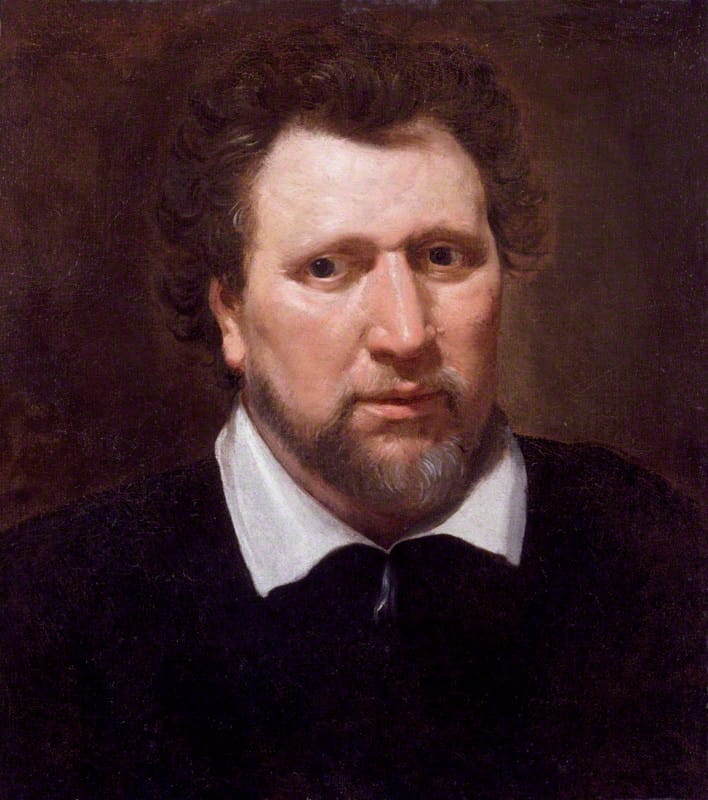
Ben Jonson
1572-1637
Ben Jonson was a playwright and poet, often listed in the ranks of Shakespeare and Marlowe (see last edition) as a core figure in the development of the English theater. While performing as an actor himself early on, he was considered to be a better writer. He was well known in both the courts and the theater circles; Shakespeare himself was cast in a few of his plays. By the latter end of his career he was prominent enough that a group known as the "Sons of Ben" were formed, among whom was Robert Herrick, whom we will look at in a few weeks.
Song to Celia
This elaborate poem portrays the overwhelming effects that "Celia" produces in the writer. The first stanza especially gives this sense of intoxication, not only with the imagery (drink... cup... wine...) but with the extravagant desire of the one being addressed. Note that this love does not hinge on any physical description of the subject herself; the passion exists as a prerequisite to the poem. She is better than wine, Jove's nectar, and roses themselves. This isn't a "why I love you" poem, but rather one that captures "what you do to me."
This poem is written in a ballad verse style, in which tetrameter and trimeter lines alternate. As with ballad verse, each successive pair of trimeter lines rhyme with each other.
An Elegy
An elegy can refer to a slightly broad range of poems, either serious, somber, and lamenting, or simply one in praise of some subject. This poem offers a praise of one in whom Love personified is made new and available to all. This is not an unbridled, wild love that flits from subject to subject, but on that is "chaste," that "subjects you to love of one." It would seem that the subject of the poem is not the one whom the author loves, as seen in the ending request to "light upon a love of mine."
The poem is written in iambic tetrameter quatrains, rhymed ABBA. This form has been called the "In Memoriam stanza," named after a long, memorial poem written by Tennyson (centuries later).
Further Reading
The Black Dove
Abram Newcomer
As we are making our way through Lent, this poem would appear to contain many appropriate themes. We are constantly plagued with the sorrow of our own sinfulness, and we must endure this and the sanctification that the Spirit faithfully brings. Praise him for his patience and constancy, for his determination to make us like Christ.
Thanks for reading! As always, I hope these poems were enjoyable. Until next time.
Discussion