



Your weekly slice of Historical Poetry
> Edmund Spenser
> Sir Philip Sidney
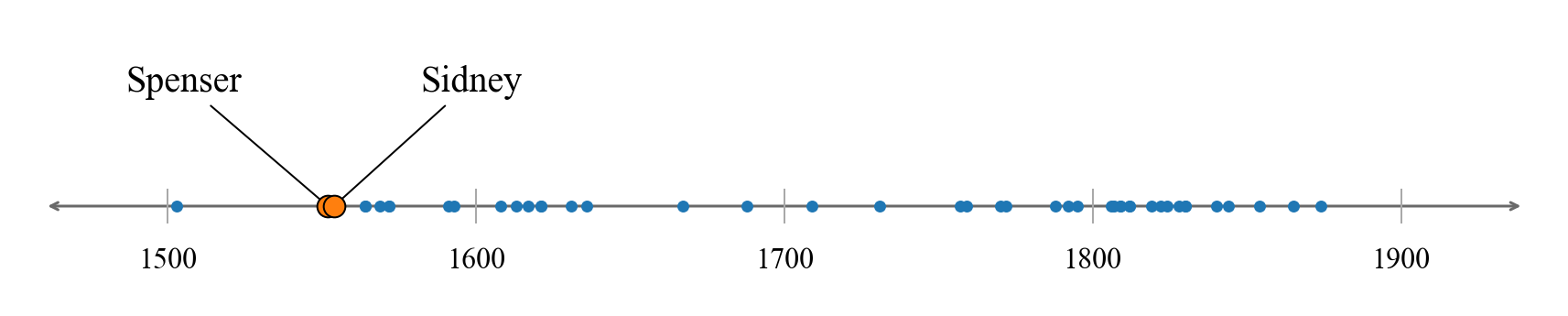
Here we continue our progression through the Poets of History with the addition of Edmund Spenser and Sir Philip Sidney. We are near the end of the Tudor Period of England (1485-1603), the last section of which is called the Elizabethan Era. This era runs (as you guessed it) while Elizabeth I was Queen, from 1558 to the end of the century. This era boasted a large development in England as a whole, and, for our purposes, the continued growth and prestige of English poetry in the world.
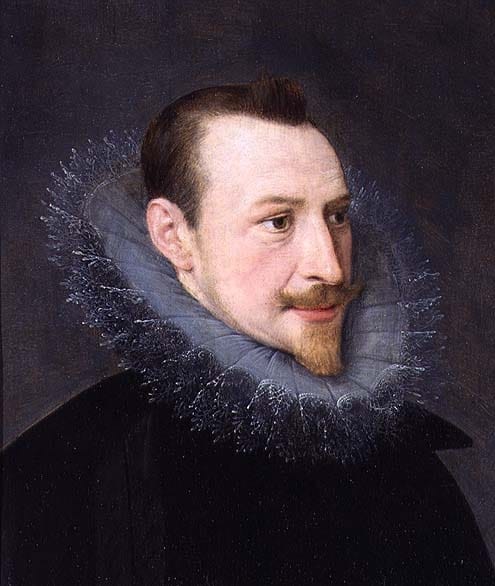
Edmund Spenser
1552-1599
Spenser is likely to be best known for his writing of the large, epic poem called The Faerie Queen. He also made contributions to the sonnet form, adapting a different rhyme scheme which would come to be known as the "Spenserian Sonnet."
Amoretti LXXV: One Day I Wrote her Name
Amoretti is a "sonnet cycle" that Spenser wrote for and about his wife. It consists of 89 sonnets, all of which use the "Spenserian" rhyme scheme: ABAB BCBC CDCD EE. This form has a weaving quality to it, where new rhymes are introduced in the midst of the previous ones. It also results in rhymed pairs of lines throughout the poem: the B rhymes at lines 4-5, C rhymes at lines 8-9, and 13-14 as the final rhymed couplet. These moments stand out, marking the transition to a new thought or a delightful conclusion.
This selected sonnet is very sweet and clear in its imagery. It matches the sentiment to be seen in some of Shakespeare's sonnets (see Shall I compare thee to a summer’s day?). The love and beauty of a woman is made "eternal" by the words of a poet. It would seem that we can't much scoff at this idea since we are still reading these words after 400 years.
Epithalamion
An epithalamion is a poem written in honor and praise of a bride on her wedding day, with a progression toward the bridal chamber (the "thalamos"). Spenser wrote this poem regarding his own wife, and it remains as one of the most well-known examples in English history. The poem as a whole traces each moment of the wedding day, from the sun rising, the bride being made ready, the ceremony, the celebration, the coming of night and the final rest in the bridal chamber.
This poem contains no shadows. It is full of beauty, goodness, delight and joy – all the correct ingredients of a wedding day. There is no jilted lover, no pining or despair. The bride is beautiful and not proud, both meek and virtuous.
Her modest eyes abashed to behold
So many gazers, as on her do stare,
Upon the lowly ground affixed are.
Ne dare lift up her countenance too bold,
But blush to heare her prayses sung so loud,
So farre from being proud.
It has been noticed by others that the structure of the poem itself is vastly well-conceived. There are 24 stanzas in total (for each hour of the day), there are 365 long lines (for each day of the year), the final stanza is an envoy containing only 7 lines (for each day of the week). Stanzas 13 and 14 are the exact center of the poem, within which the wedding ceremony is begun (13) and concluded (14). There could even be further chiastic elements at play between each of the mirroring stanzas.
The rhyme and metrical scheme of each stanza is intriguing as well. It is mostly written in iambic pentameter, but specific lines are shortened to trimeter for a rhythmical effect. While there are some stanzas that are exceptions, most follow this pattern: ABABCC DCDEE FGGFHH II. The final line is a loosely repeated refrain, along the lines of "...woods answer... theyr echo rings."
The poem is a bit longer; it took me around 40 minutes to read in its entirety. It is, however, well worth the time, not only for its technical excellence but also for its joyful imagery.
Further Reading
- Any of the other Amoretti sonnets are great (find them all here), but here are a few for quick reference.
- Prothalamion - A similar bridal poem written for the double marriage of two sisters.
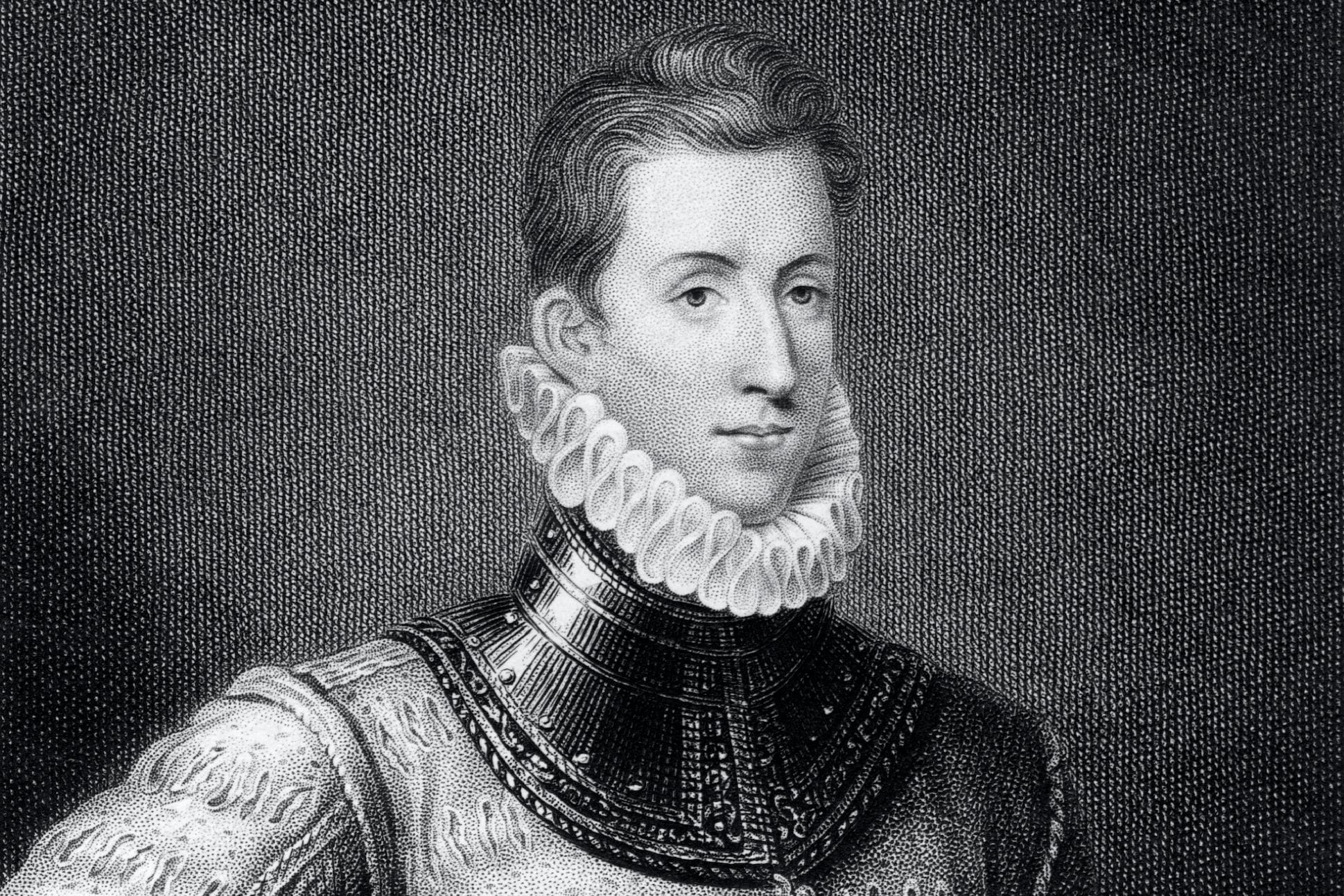
Sir Philip Sidney
1554-1586
Sir Philip Sidney was an aristocrat, member of the English court, soldier, and poet. He had a very public role in the life of England in that day, viewed by many to be an example of the quintessential Englishman: noble, brave, knighted and gallant. He contributed to different fields of literature, his Defense of Poesy essay being a critical work defending the importance of poetry. He died at the young age of 31, injured during a battle with the Spanish.
Astrophil and Stella I
Sidney also wrote his own sonnet series called "Astrophil and Stella," directed toward a woman that he loved (though never married). Next to Shakespeare's sonnets, this cycle is considered to be one of the best of the time. This sonnet specifically begins the series and serves as its introduction.
The Bargain
This is a sweet and simple poem written from the perspective of a woman regarding the man she loves. In witty display, the poem portrays the "bargain" of two hearts being exchanged. The second stanza is such fun, full of pronouns and references back and forth between the two hearts, where they belong and what they do.
Further Reading
- Any of the other Astrophel and Stella sonnets are great, though here are some further examples
Terra Technica
Abram Newcomer
By now we're a bit soaked in sonnets (and I'm afraid we'll continue to be for the next few months), so I decided to share one of my own poems written in a different form. This was written last year during our vacation to the beautiful Adirondacks. I hope you feel the breeze and the leaves underfoot as you read it.
As always, I hope you enjoyed this edition! These poems should last you well over these next two weeks. Until then, happy reading.
Next up: Christopher Marlowe and William Shakespeare
Discussion